Online business grows quickly, and old methods cannot keep up. Many owners begin with simple spreadsheets. However, these tools start to fail once order volume rises. The more sales you handle, the more mistakes appear.
Here are the real reasons sellers move to Xero for ecommerce.
- Growth across many channels leads to scattered information
- Bank deposits no longer match what the store dashboard shows
- Tax records become difficult to track by hand
- Returns and refunds are often missed
- Manual typing leads to errors that slow month end work
As a result, reports become confusing and decision making becomes harder. At this point most sellers realise they need a reliable system that can support growth.
This is where Xero for ecommerce helps. It gathers all financial activity in one place, and it keeps information clean even when sales increase. Because data arrives in a clear format, owners gain confidence in their numbers and spend less time fixing mistakes.
Why Ecommerce Businesses Need a Modern Accounting System
Online business grows quickly, and old methods cannot keep up. Many owners start with spreadsheets, but soon discover that the manual approach breaks once order volume rises. When sales increase, errors increase as well.
Here are the real reasons sellers adopt Xero for ecommerce.
- First, growth across many channels leads to scattered information.
- Next, bank deposits no longer match what the store dashboard shows.
- After that, tax records become difficult to track manually.
- As a result, returns and refunds are often missed.
- Finally, manual typing leads to mistakes that take days to fix.
These issues slow down business growth. A clean accounting system is not just a tool. It becomes a foundation.
Xero for ecommerce removes these problems by centralizing all financial data. Sellers get accurate information at the right time.
How Xero Supports the Full Ecommerce Cycle
A strong accounting system should support every part of an online business. This includes product development, marketing, fulfillment and financial reporting.
Here is how Xero for ecommerce strengthens each step.
- It captures sales data from every channel
- It records taxes in a clear structure
- It updates bank transactions daily
- It tracks inventory changes
- It records expenses and fee activity
- It supports cash flow visibility
- It prepares accurate financial reports
This means sellers can follow the journey of every order, from the moment the customer pays to the moment funds arrive in the bank.
The Main Benefits of Using Xero for Ecommerce
Once a store connects to Xero for ecommerce, the improvements become visible almost immediately. Many sellers describe the experience as a major relief because the system removes confusion.
The most valuable benefits include:
- Clear sales data gathered from many platforms
- Automatic daily bank feeds
- Accurate tracking of revenue and expenses
- Better understanding of product profitability
- Faster month end reporting
- Less manual typing and fewer errors
- One central source of truth for accountants and owners
When data arrives in the correct format, business decisions become stronger. Owners can finally focus on growth instead of fixing numbers.
Shopify and Xero for Ecommerce: A Strong Partnership
Shopify is one of the most widely used platforms for online stores. It is powerful for order management and product handling, but it does not replace a proper accounting system. Many sellers move to Xero for ecommerce because they want accurate financial control.
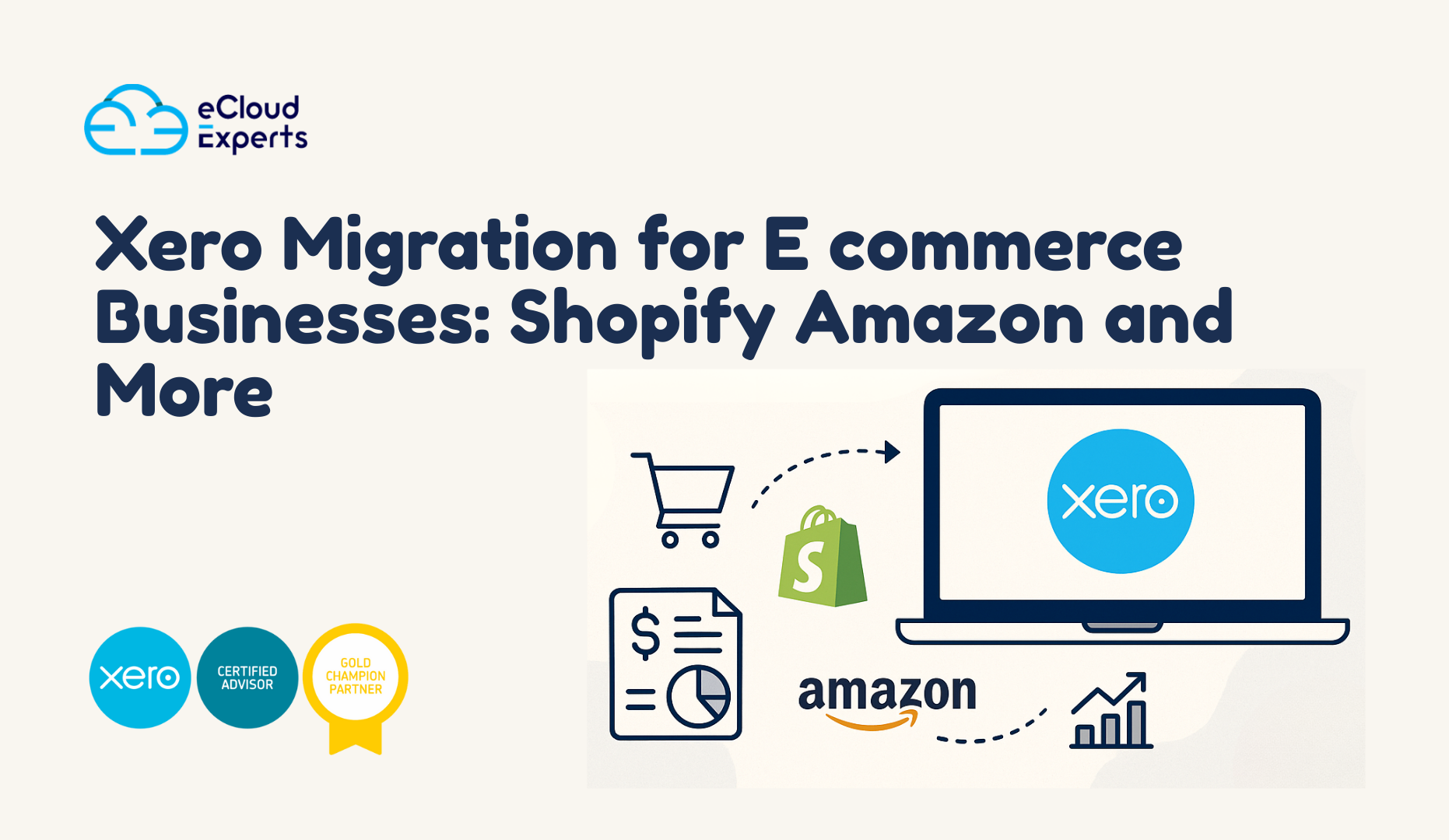
The Shopify to Xero connection can bring in important items such as:
Order details
Shipping income
Refunds
Discount amounts
Product taxes
Stock adjustments
These items then match with bank feeds inside Xero. Owners can see their sales totals, their real income and the effect of each promotion. No more spreadsheets with errors. No more confusion about daily sales totals.
Multi currency stores also benefit because Xero for ecommerce handles international values with clarity.
Amazon Sellers and Xero for Ecommerce
Amazon is known for its complex fee structure. Many sellers struggle to understand the true profit of their products because Amazon adds many adjustments to each payout.
This is the reason so many sellers adopt Xero for ecommerce. It gives them a way to break down all activity inside their accounts.
The Amazon to Xero connection supports important details such as:
Sales
Refunds
Amazon fees
Storage charges
Pick and pack charges
Advertising spend
Promotional discounts
Inventory costs
Reimbursements
When this information enters Xero correctly, sellers finally understand their actual profit margins. They can compare product performance and plan advertising budgets with confidence.
Xero for ecommerce turns Amazon’s complex numbers into a format that sellers can work with.
WooCommerce Store Owners and Xero for Ecommerce
WooCommerce offers flexibility for sellers who use WordPress. But since WooCommerce is not built for accounting, most sellers pair it with Xero for ecommerce to gain proper financial clarity.
Key WooCommerce data that can sync to Xero includes:
Taxes
Shipping income
Refunds
Payment gateway fees
With this information inside Xero, sellers can produce accurate financial statements without spending hours cleaning up errors. This combination works especially well for sellers who manage multiple product lines.
Other Platforms That Work With Xero for Ecommerce
One of the strongest features of Xero is its wide range of integrations. This makes it ideal for multi channel sellers.
Here are some of the platforms that connect well with Xero for ecommerce.
- BigCommerce
- Etsy
- Squarespace
- Shopwired
- Lightspeed
- TikTok Shop
- eBay
- Wolt
Many sellers use two or three of these platforms together. Without a system like Xero for ecommerce, it becomes very hard to organize accurate accounting data.
What Data Syncs Into Xero During Migration
Understanding what moves into Xero is important for planning. This helps owners know how reports will look once migration is complete.
The most common data points include:
- Sales and revenue
- Refunds and credit notes
- Discount values
- Gateway fees
- Marketplace fees
- Tax collected
- Shipping income
- Inventory movement
- Payout totals
This creates a complete picture of your financial activity. When this information flows into Xero for ecommerce, the system can produce accurate profit and loss reports, cash flow summaries and balance sheets.
Choosing the Right Integration for Xero for Ecommerce
Not all online stores operate the same way. The right integration depends on your size, order volume and business structure.
Here are the main factors to consider when choosing a connector.
- How many orders you receive daily
- How many channels you use
- Whether you sell internationally
- How detailed your inventory tracking needs to be
- How complex your reporting requirements are
For example:
A2X is ideal for Amazon and Shopify sellers with medium to large volume
Link My Books is popular with smaller stores
Cin7 Core and Unleashed are used for detailed inventory management
These tools create clean financial entries that flow into Xero for ecommerce without confusion.
Inventory Management and Xero for Ecommerce
Inventory is often the largest asset in an online business. Accurate stock tracking helps businesses prevent overselling or overstocking.
Xero includes a basic inventory system suitable for simple operations. More advanced sellers prefer dedicated tools and then connect them to Xero for ecommerce.
Advanced inventory tools can track:
Multiple stock locations
Batch numbers
Expiry dates
Purchase orders
Manufacturing activity
Warehouse transfers
Once connected, inventory tools manage product activity while Xero handles financial records. This creates a complete and reliable system.
Advanced Reporting Features in Xero for Ecommerce
Financial reporting helps owners understand the health of their business. Because of this, a clear reporting system is essential for growth. Xero for ecommerce supports detailed reporting that improves decision making and gives owners a full picture of their financial activity.
Popular reports include:
- First, profit by product group
- Next, cash flow summary
- After that, tax reports for each region
- Then, trend analysis by month
- Later, expense tracking
- Also, supplier cost monitoring
- Finally, advertising spend evaluation
Common Problems Faced by Sellers Without Xero for Ecommerce
Many sellers wait too long before upgrading their accounting system. This often creates bigger problems later.
The most common issues include:
- Tax errors
- Unmatched payouts
- Missing refunds
- Incorrect stock values
- Sales that do not reflect real profit
- Manual entries that create delays
These problems disappear once sellers move to Xero for ecommerce. Accuracy saves both time and money.
Why Ecloud Experts Support Ecommerce Sellers Using Xero
Ecloud Experts has worked with many ecommerce stores and understands the flow of multi channel data. Our team knows the behaviour of Shopify, Amazon and other major platforms. Because of this, we create setups that match the real needs of online sellers.
We help sellers by providing:
- First, correct setup for each channel
- Next, accurate mapping of fees and categories
- Then, clean migration of historical data
- After that, training for store owners and staff
- Finally, ongoing support after launch
Our goal is to make sure clients use Xero for ecommerce with confidence. As a result, they can grow their business with clear numbers and a strong financial foundation.
When You Should Migrate to Xero for Ecommerce
You can migrate at any time, but some moments are better for reducing disruption.
You should consider migrating when:
- You sell on more than one platform
- First, reports no longer feel reliable
- Next, your accountant requests missing information
- After that, you want clear cash flow insight
- Then, you want to scale your store
- Finally, you plan to seek funding or investment
A strong accounting base supports long term growth.
Our Three Stage Migration Method for Xero for Ecommerce
Ecloud Experts follow a simple and clear approach for every migration. We designed this method to reduce confusion and create a smooth transition. Because of this, each step feels easy for sellers to understand.
- First, we learn about your business, channels and workflow
- Next, we set up Xero correctly and connect the right tools
- Then, we clean your historical data and train your team
This approach allows ecommerce owners to start using Xero for ecommerce with confidence. In the end, they gain a clean financial base that supports future growth.
Final Thoughts
Running a successful online business requires more than good products. It requires financial clarity. Xero for ecommerce gives sellers the visibility they need to make strong choices and grow with confidence.
Shopify sellers enjoy clean daily records.
Amazon sellers finally understand true profit.
WooCommerce sellers gain simple and reliable reporting.
If you want accurate numbers and more control over your business, Xero for ecommerce is the system that helps you reach the next level.
Ready to Move Your Store to Xero for Ecommerce
If your online business is growing and your numbers feel harder to control, this is the right moment to switch to Xero for ecommerce. A clean accounting system helps you make better choices, understand real profit and keep your books ready for growth.
Ecloud Experts can guide you through every step. We set up your account correctly, connect your platforms, clean your old data and support your team.
Start your migration today and get the clarity your ecommerce business deserves.