
Excel has played a big role in helping many businesses get off the ground. It feels familiar, flexible, and easy to control. In the early days, spreadsheets give owners a sense of visibility because everything sits clearly in front of them. Owners can see income, expenses, and totals in one place and make changes instantly. That level of control feels reassuring when resources are limited and every decision feels personal.
As the business grows, however, the demands placed on the spreadsheet increase quietly. Transactions rise, responsibilities expand, and decisions start to carry more weight. Excel does not adapt to this change. It stays the same while the business moves forward. This is usually when owners begin searching for Excel to Xero, not because Excel suddenly failed, but because it stopped supporting the reality of a growing business.
Moving from Excel to Xero is rarely about loving new software. It is about removing friction, reducing risk, and getting back time and confidence. This article explains where spreadsheets fall short, what problems they create over time, and why Excel to Xero is often the point where business owners regain clarity and control.
Why Excel Feels Right at the Start
In the beginning, Excel feels like the perfect solution. It opens quickly, costs nothing extra, and requires no formal setup. Business owners can design spreadsheets to match exactly how they think, whether that means simple income tracking or more detailed expense breakdowns. There is comfort in knowing that every number can be edited manually.
For freelancers, startups, and very small businesses, Excel can be sufficient for a short period. Transaction volumes are low, reporting needs are basic, and usually only one person is responsible for the numbers. Errors are easier to spot because activity is limited and memory fills in the gaps. At this stage, Excel feels helpful and efficient.
The problem is that Excel rarely announces when it is no longer suitable. Businesses often continue using it out of habit, even when it is no longer supporting good decisions. That silent mismatch between business size and system capability is where problems begin.
The Point Where Excel Starts Slowing You Down
As operations expand, spreadsheets begin to demand far more attention than they should. What once felt quick and manageable slowly turns into a daily chore. Tasks that used to take a few minutes now stretch into hours because every new transaction adds another layer of detail. Each new customer means more rows to track, more formulas to maintain, and more chances for something to go wrong. Each new expense increases the complexity of categorising, checking, and reconciling figures. Over time, managing the spreadsheet becomes a job in itself rather than a support tool for running the business.
Manual data entry becomes constant and mentally draining. Instead of focusing on customers or growth, business owners find themselves typing numbers, copying cells, and double checking work late into the evening. Multiple versions of the same file start to appear because there is fear of losing data or overwriting something important. One file is marked final, another final version two, and another final latest just in case. This version chaos creates confusion and makes collaboration almost impossible.
As the spreadsheet grows, formulas become more complex and fragile. A small change in one cell can affect an entire report without warning. Reports that once felt clear start to look suspicious. Numbers do not quite add up, but it is hard to see why. Confidence in the data fades, and with it confidence in decision making. Many owners delay looking at reports or avoid them entirely because they no longer trust what they are seeing.
Excel does not suddenly fail or show an error message saying it is no longer suitable. Instead, it quietly consumes time, energy, and focus. The business keeps moving, but the system struggles to keep up. By the time owners fully realise that Excel is slowing them down, the spreadsheet often feels too large and too complex to replace without professional help. That is usually the moment when Excel stops being a helpful starting tool and becomes a barrier to running the business properly.
Excel Accounting Problems Most Businesses Ignore
Many spreadsheet problems hide in plain sight and quietly grow over time. During Excel to Xero reviews, it is common to find transactions that are missing, duplicated, or recorded in the wrong period. A payment can appear twice when someone copies and pastes it incorrectly. An expense can fall into the wrong month when someone adjusts dates manually.
Over time, these small issues distort reports and make it difficult to understand the true financial position of the business.
Another common issue is that balances often fail to match bank statements. Owners may reconcile numbers informally by eye rather than through a structured process. When differences appear, they are sometimes adjusted manually without a clear explanation. This creates a cycle where the spreadsheet looks balanced on the surface but no longer reflects reality underneath. As months pass, the gap between spreadsheet figures and actual bank activity quietly widens.
VAT is particularly vulnerable in spreadsheets because it relies heavily on formulas and manual judgement. VAT rates may change, but formulas remain the same. Some transactions get treated as standard rated when they should not, while others get excluded entirely. To meet deadlines, owners often make quick adjustments with little or no documentation to explain the reason.
Over time, these inconsistencies pile up and create serious compliance risk.
By the time the problem is fully recognised, fixing everything inside Excel feels risky and exhausting. Changing one formula could affect years of data. Correcting past errors might break current reports. This is when businesses feel stuck. They know the spreadsheet is unreliable, but the data inside it feels too important to abandon or rewrite from scratch.
At this point, Excel to Xero becomes the safest way forward. Instead of patching over problems, the data can be reviewed, cleaned, and moved into a system designed to manage accounting properly. This approach fixes root causes rather than hiding them and allows the business to move forward with confidence.
Why Excel Is Risky for VAT and Compliance
VAT compliance relies on accuracy, consistency, and a clear record of how numbers were calculated and changed over time. Excel does not provide any of this automatically. It simply does exactly what the user tells it to do. If a formula is incorrect, outdated, or copied from the wrong cell, the VAT figure will be wrong every single time, and Excel will never flag the issue.
A common problem occurs when spreadsheets apply incorrect VAT rates to transactions. This usually happens when users reuse formulas without updating them or mix different VAT treatments in the same sheet. As a result, businesses may claim VAT on expenses where they should not or record sales without the correct tax treatment.
These mistakes are rarely intentional, but they are easy to make when everything is manual and unchecked.
Adjustments are another major risk. When numbers do not look right, many spreadsheet users make quick manual changes to force totals to balance. These adjustments are often undocumented, with no clear explanation of why they were made or what they relate to. Over time, this removes any meaningful audit trail. If questions arise later, it becomes difficult or impossible to explain how the VAT figures were calculated.
These issues can lead to penalties, interest charges, and stressful conversations with accountants or tax authorities. Even when mistakes are genuine, the responsibility still falls on the business owner. Excel offers no protection against this risk.
Xero reduces these problems by applying VAT rules consistently across all transactions. It keeps a clear record of every entry and every change, making it easier to review, explain, and defend figures if needed. Moving from Excel to Xero helps protect the business from compliance surprises and provides peace of mind that VAT is being handled correctly.
Time Cost The Silent Drain of Excel
The biggest cost of Excel is rarely measured in money. It is measured in time, energy, and mental load. Most business owners never sit down and calculate how many hours they spend maintaining spreadsheets. Instead, they live with a constant feeling of pressure and the sense that they are always behind, no matter how hard they work.
Small time losses add up quickly. Owners check bank statements line by line. They enter transactions manually, then check them again because mistakes happen easily. They review formulas again and again since one error can distort an entire report. When something looks wrong, they search through rows and tabs to find the cause. Because trust in the numbers stays low, they repeat the same work just to feel confident enough to move on.
Month end becomes particularly stressful. Instead of using reports to understand performance, owners treat reporting as a task to survive. Evenings and weekends are taken up fixing spreadsheets, preparing figures for accountants, or trying to make sense of numbers that never quite feel final. This constant catch up mode drains focus and leaves little energy for planning or growth.
After an Excel to Xero move, many business owners describe a noticeable sense of relief. The work does not disappear, but it becomes structured and predictable. Bank feeds reduce manual entry, reports update automatically, and numbers can be trusted without endless checking. As a result, accounting tasks stop dominating personal time, and business owners regain evenings, weekends, and mental space to focus on what actually moves the business forward.
What Makes Xero Different From Excel
Excel stores data, but Xero actively manages it, and that difference has a huge impact on how a business operates day to day. Excel is designed for static information that someone enters and maintains manually. Xero is designed for live business activity where transactions are happening constantly and accuracy matters in real time.
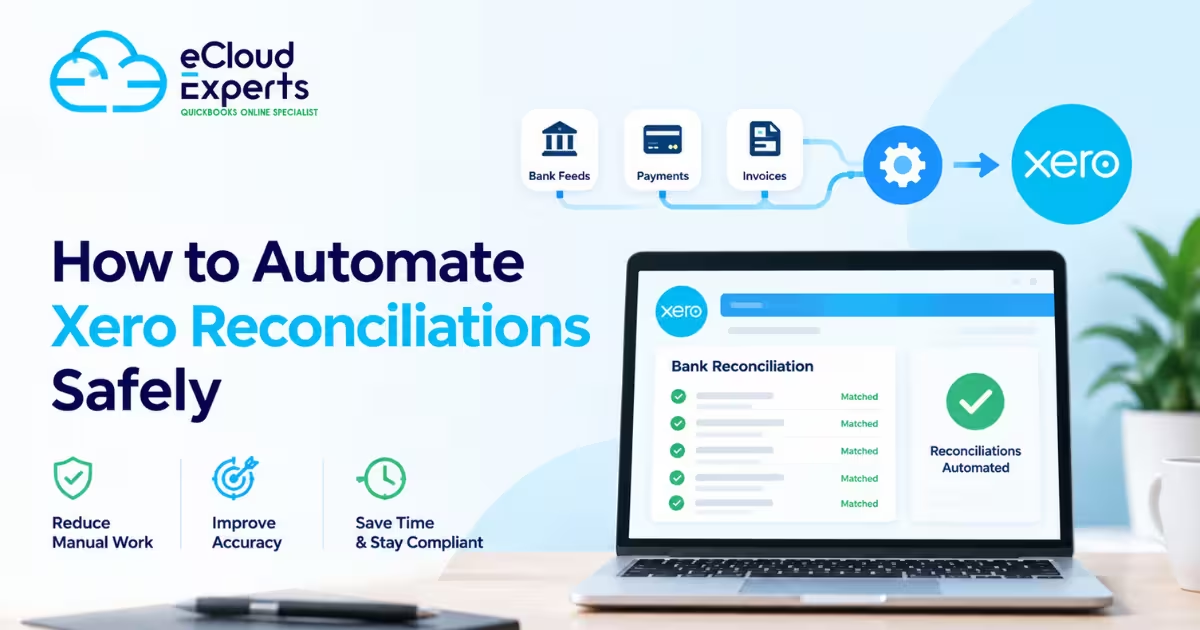
Xero connects directly to bank feeds, which removes the need for manual data entry for most transactions. As money moves in and out of the bank, the system updates automatically. Reports refresh in real time, so figures are always current rather than weeks out of date. Tax logic is applied consistently across all transactions, reducing the risk of errors caused by manual formulas or incorrect assumptions.
Every action in Xero is recorded, creating a clear and reliable history of changes. If something is edited, the system shows who made the change and when it happened. This creates accountability and makes reviews far easier. Multiple users can work in the system at the same time without overwriting each other’s work, which is impossible to manage safely in spreadsheets.
Because Xero is built to highlight inconsistencies, errors are easier to spot and fix early. Bank balances, reports, and tax figures are designed to tie together, making it harder for problems to hide. This is why Excel to Xero is not just a software switch. It is a shift from manually controlling data to using a system built around how real businesses operate every day.
What Changes After Moving From Excel to Xero
The impact of moving from Excel to Xero is usually felt quickly. Business owners often say they finally trust their numbers again. Cash flow becomes visible at any time, not just at month end. Reports stop feeling intimidating.
Bank reconciliation becomes a regular habit instead of a painful task. Profit and loss reports update automatically as transactions are entered. VAT summaries are clear and consistent. Invoicing becomes faster, and administrative stress drops significantly.
Nothing magical happens. The numbers simply start behaving the way they should.
Excel to Xero and Better Business Decisions
Decisions are only as good as the data behind them. When numbers are delayed or unreliable, owners rely on instinct rather than facts. That creates risk, especially as stakes increase.
Excel to Xero provides live insight into cash position, profitability, and spending patterns. With accurate and timely information, owners can decide when to invest, when to pause, and how to plan for growth. Confidence in the numbers leads to confidence in decisions.
Common Myths That Stop Businesses Switching
Many businesses delay switching because of fear. Some believe the process is too complex. Others worry their data is too messy or that important information will be lost. Some wait for the year end, assuming it is safer.
In reality, Excel to Xero migrations are routine when handled professionally. Messy data is exactly why migrations exist. Proper processes protect information, and waiting usually makes problems harder to fix.
When Excel Becomes a Growth Blocker
There is a clear moment when Excel stops being neutral and starts holding the business back. Owners delay hiring because they cannot see true costs. Pricing decisions feel uncertain. Reports cause anxiety rather than insight.
At this stage, Excel is no longer just inconvenient. It actively limits growth and confidence.
How an Excel to Xero Migration Should Work
A proper Excel to Xero migration follows a structured approach. First, spreadsheets are reviewed to understand structure, risks, and errors. Then data is cleaned so issues are fixed before anything moves. Accurate balances and records are migrated into Xero, followed by detailed checks to confirm reports, bank balances, and VAT figures match expectations.
This approach ensures the past is corrected rather than carried forward.
Why DIY Excel to Xero Migrations Often Fail
Xero makes importing data look simple, but simplicity can be misleading. Many DIY migrations bring incorrect opening balances, miss historical VAT issues, or map accounts incorrectly. Without careful checks, businesses end up with Xero that contains the same problems as Excel.
Professional Excel to Xero work focuses on accuracy first so the new system starts clean and reliable.
A Real Excel to Xero Example
One growing service business relied on Excel for several years. They managed multiple spreadsheets, struggled to understand VAT, and lacked confidence in profit figures. They delayed switching because they feared disruption.
After moving from Excel to Xero, monthly reporting became routine. VAT matched accountant calculations. Cash flow became predictable. The biggest change was peace of mind and clarity.
What Data Can Be Moved From Excel to Xero
A well planned migration can include opening balances, customer and supplier lists, outstanding invoices, and historical transactions where needed. The scope depends on reporting needs and business complexity. Careful planning ensures nothing important is lost.
What to Prepare Before Moving From Excel to Xero
Preparation helps migrations run smoothly. Finalized spreadsheets, a clear cut off date, bank statements, and VAT details all support accuracy. Most business owners worry about preparation, but guidance and support are provided throughout the process.
Why eCloud Experts Focus on Accuracy First
Software on its own does not solve accounting problems. Accuracy does. Moving data from Excel into Xero without fixing underlying issues simply transfers the same problems into a new system. That is why our Excel to Xero approach always starts with accuracy, not speed.
We focus on getting balances right before anything is moved. This means reviewing spreadsheets carefully, checking figures against bank statements, and identifying inconsistencies early. VAT is treated with particular care, because even small mistakes can create serious compliance risk. We ensure VAT figures are clean, consistent, and supported by clear logic rather than assumptions or outdated formulas.
Reports are verified, not assumed to be correct. Profit and loss, balance sheet, and cash figures are checked so they reflect the true position of the business. Where issues exist, we explain what was wrong and how it was fixed in plain language. No technical jargon and no shortcuts.
By fixing root causes instead of patching symptoms, we give businesses a clean starting point in Xero. The result is not just new software, but numbers that can be trusted and a system that supports confident decision making going forward.
Call to Action
If you are ready to move from Excel to Xero, the most important thing is doing it properly. A rushed or poorly planned switch can carry spreadsheet problems straight into Xero, which defeats the purpose. This is where experience matters.
At eCloud Experts, we do more than move data. We review your spreadsheets carefully, fix issues before anything is transferred, and verify every balance so you start in Xero with numbers you can trust. We explain what we are doing in plain language, so you are never left guessing or feeling out of control.
Whether you are feeling stuck, overwhelmed, or simply tired of spreadsheets slowing you down, now is the right time to act. The longer you wait, the harder the clean up becomes.
Speak to eCloud Experts today and take the first step toward clean records, accurate reporting, and a system that supports your business as it grows.