Xero migration for accountants is no longer optional. It has become a core responsibility for modern accounting firms.
Business owners are under pressure. They want faster reports, better visibility and systems that work from anywhere. Many are stuck with outdated desktop software or complicated setups that slow them down. When they decide to change they look to one place for answers. Their accountant.
This is where things can go right or very wrong.
A smooth Xero migration builds trust, strengthens long term relationships and positions the accountant as a strategic partner. A poor migration creates confusion, stress and sometimes permanent damage to the client relationship.
This expanded guide explains exactly how accountants can handle Xero migrations properly. It focuses on planning execution risk control and client success. No theory. Just real world guidance.
Why Xero Migration for Accountants Is Growing So Fast
The accounting industry has changed quickly.
Clients now expect their accountant to guide technology decisions not just report numbers. Cloud accounting is no longer new. It is the standard.
Common reasons clients request a Xero migration include
• Leaving unsupported desktop software
• Difficulty accessing data remotely
• Poor quality financial reports
• Heavy spreadsheet dependence
• Business growth requiring better systems
• Ecommerce or app integration needs
• Ongoing bookkeeping errors
Most clients underestimate how complex migration can be. They assume data can simply be moved across. Accountants know the reality is very different.
This is why Xero migration for accountants requires structure, discipline and experience.
Why Accountants Should Always Lead the Migration Process
Letting clients manage their own migration is risky.
Clients often
• Export incorrect data
• Miss key balances
• Break VAT or tax logic
• Duplicate contacts and invoices
• Lose historical reporting accuracy
Once these problems exist fixing them takes more time than doing the migration properly from the start.
When accountants lead the process they control quality timing and validation. This protects both the client and the firm.
Leading the migration also positions the accountant as a trusted advisor not just a service provider.
When Should an Accountant Recommend Xero Migration
Not every client needs to move immediately.
A good recommendation is based on evidence not trends.
Strong signals include
• Current accounting software nearing end of life
• Delays in monthly reporting
• Multiple disconnected systems
• Manual processes everywhere
• Difficulty collaborating with teams
• Plans to scale or raise funding
If several of these issues exist a move to Xero usually makes sense.
Understanding Client Expectations Before Migration
Before touching any data accountants must manage expectations.
Clients often expect
• No downtime
• No data loss
• Immediate improvement
• Minimal learning curve
Accountants must explain
• What will change
• What will not move across
• What training is required
• When benefits will appear
Clear communication early prevents frustration later.
Xero Migration for Accountants A Structured Framework
This framework reduces errors and protects client trust.
Step 1 Full Review of the Existing System
Never migrate without understanding the source.
Accountants should review
• Current accounting platform
• Number of transactions
• Open financial periods
• VAT or sales tax setup
• Multi currency requirements
• Connected apps and integrations
This review determines the complexity timeline and risk level.
Skipping this step causes surprises later.
Step 2 Data Clean Up Before Migration
This is where accountants add the most value.
Before migration ensure
• Bank accounts are fully reconciled
• Old periods are closed
• Control accounts are cleared
• VAT balances are correct
• Charts of accounts are simplified
Bad data does not improve inside Xero. It just becomes cleaner looking bad data.
Clean input equals reliable output.
Step 3 Designing the Xero Structure
Xero setup should be intentional.
Accountants must configure
• Chart of accounts aligned to reporting needs
• Financial year dates
• VAT or tax rules
• Tracking categories for analysis
• User access permissions
A well designed structure saves hours of future work.
Step 4 Deciding What Data to Migrate
Not all data deserves to move.
Best practice usually includes
• Opening balances
• Outstanding invoices
• Outstanding bills
• Customer and supplier contacts
• Fixed assets if required
Historical transactions can remain in the old system with reports saved as reference.
This approach keeps Xero fast, stable and easier to manage.
Step 5 Executing the Migration
Execution should be controlled not rushed.
Migration methods may include
• CSV imports
• Approved migration tools
• Manual journal entries
Automation helps but accountants must always review results manually.
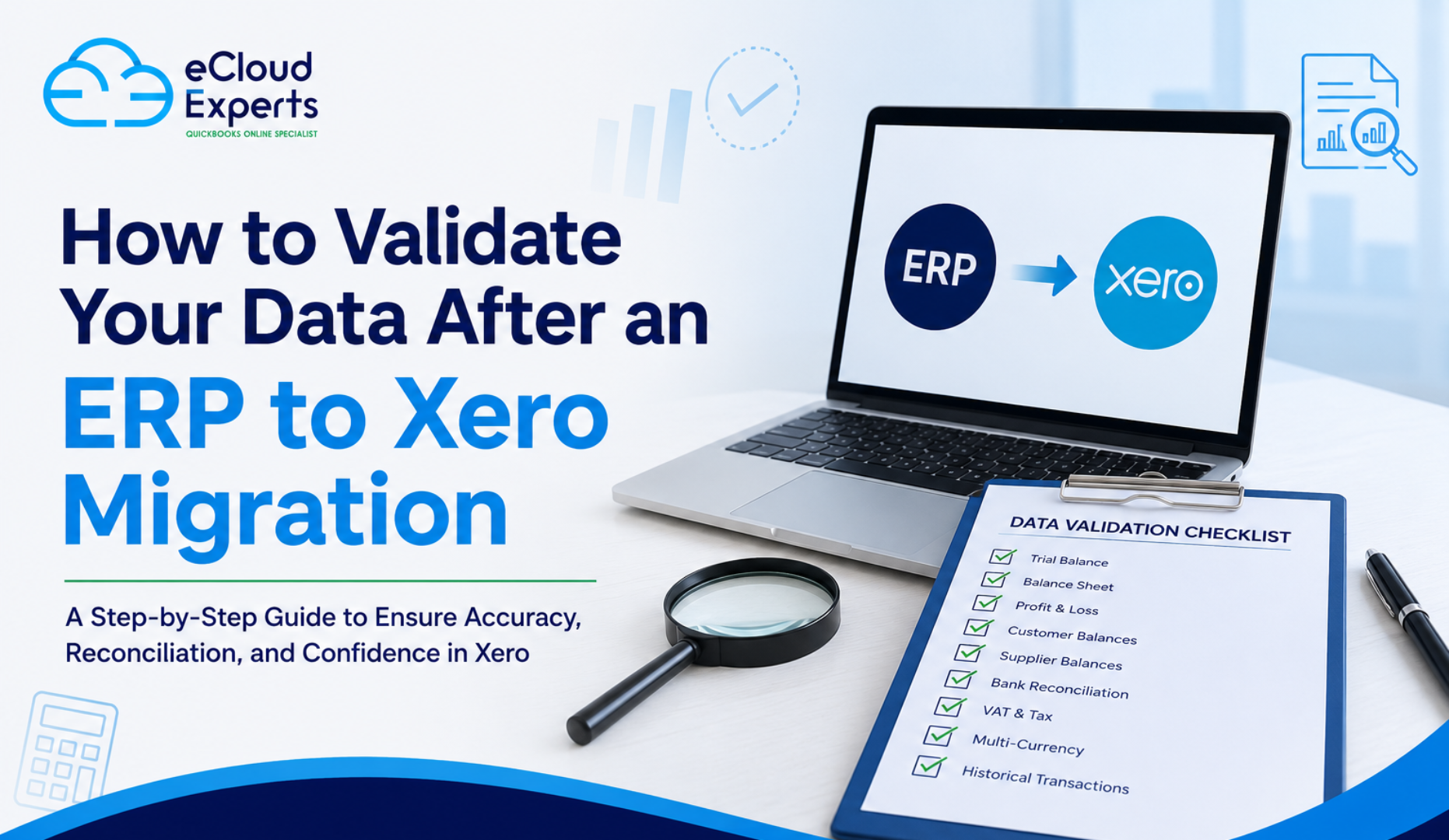
Step 6 Validation and Reconciliation
Validation protects credibility.
After migration confirm
• Trial balance matches exactly
• VAT balances align
• Aged receivables are correct
• Aged payables are correct
• Bank balances match reconciled figures
If anything is off stop immediately and correct it.
Never hand over unverified data.
Step 7 Client Training and Adoption
Even perfect data fails without proper training.
Clients should understand
• Daily transaction workflows
• Bank reconciliation process
• Invoicing and billing
• Key reports to review
Training should be short focused and practical.
Confidence drives adoption.
Why Xero Is Ideal for Accountants and Clients
Xero is designed for collaboration.
Benefits for accountants include
• Real time access to client data
• Clean structured reports
• Easy collaboration with clients
• Strong integration ecosystem
• Scales with business growth
Clients benefit from
• Simple interface
• Faster reporting
• Better visibility
• Fewer errors
This reduces support pressure on accounting firms.
Common Xero Migration Mistakes Accountants Must Avoid
Even experienced firms make mistakes.
Common errors include
• Migrating unreconciled data
• Using default charts without review
• Ignoring VAT complexity
• Migrating too much historical data
• Skipping final validation
Each mistake increases rework and risk.
A careful process avoids these issues.
Managing Complex Xero Migrations for Clients
Some migrations need advanced planning.
Examples include
• Ecommerce businesses with large order volumes
• Multi currency operations
• Group companies
• High transaction environments
These migrations often require specialist support and manual checks.
Trying to rush them increases risk significantly.
Why Many Accountants Outsource Xero Migration
Outsourcing is not a weakness. It is smart risk management.
Accounting firms outsource because
• Migration is time intensive
• Errors damage trust
• Staff time is limited
• Advisory work is higher value
Outsourcing allows accountants to stay focused on clients while specialists handle execution.
How eCloud Experts Support Xero Migration for Accountants
eCloud Experts work directly with accounting firms worldwide.
We support accountants by providing
• Detailed pre migration reviews
• Clean controlled migration execution
• Full validation and testing
• Client ready Xero setups
• Post migration support
We operate quietly in the background.
You stay the trusted advisor.
Business Benefits for Accounting Firms
Offering Xero migration properly creates long term value.
Firms gain
• Stronger client loyalty
• Higher value engagements
• Reduced future cleanup work
• Better retention
• More advisory opportunities
Clients remember who made the transition smooth.
Building a Repeatable Migration Service Inside Your Firm
Accountants who standardize migration processes win long term.
Key elements include
• Clear internal checklists
• Defined client communication steps
• Standard validation procedures
• Trusted migration partners
Consistency protects quality.
The Long Term Impact of a Well Executed Xero Migration
A good migration is not just technical.
It leads to
• Better reporting
• Faster decision making
• Improved client confidence
• Stronger accountant client relationships
This is where accountants move from compliance to advisory.
Final Thoughts
Xero migration for accountants is about more than moving data.
It is about trust accuracy and future success.
A structured approach reduces risk.
Clean data protects credibility.
Proper training drives adoption.
When migrations are done properly accountants win, clients win and problems disappear quietly.
Managing Xero migrations for clients takes time focus and absolute accuracy.
One mistake can damage trust.
One clean migration can lock in a client for years.
If you want to deliver reliable Xero migrations without taking on extra risk or workload, work with specialists who do this every day.
eCloud Experts supports accountants with secure accurate Xero migrations handled end to end.
We work quietly in the background while you stay front and center with your client.
What you get
• Clean structured Xero setup
• Accurate data migration and validation
• Reduced pressure on your internal team
• Protected client relationships
• Ongoing support when needed
Talk to eCloud Experts today and make your next Xero migration smooth from day one.