
A bank balance is not a measure of profit, and a growing sales ledger is not proof that cash will be available for payroll, VAT or suppliers. Xero bookkeeping gives business owners a current, reliable view of what is happening behind those headline numbers. Done properly, it turns day-to-day transactions into real business insight – not a year-end clean-up exercise.
For UK businesses, the value is broader than keeping records tidy. Accurate Xero bookkeeping supports VAT compliance, stronger cashflow planning, faster month-end reporting and decisions based on current information. It also creates a finance function that can scale without the overhead of building a large in-house team.
What Xero bookkeeping should achieve
Bookkeeping in Xero is the disciplined process of recording, categorising and checking financial activity so the accounts reflect reality. That includes sales invoices, purchase bills, bank transactions, expenses, payroll journals, loan movements, VAT and balance-sheet items such as debtors, creditors and prepayments.
The software makes routine work quicker, but it does not make every accounting decision for you. A bank feed can bring transactions into Xero automatically; it cannot always determine whether a payment is an allowable expense, a director’s loan, equipment to capitalise or a personal transaction. The quality of the output still depends on a sound chart of accounts, consistent processes and knowledgeable review.
When those foundations are in place, Xero becomes a growth engine. Directors can see which customers owe money, whether margins are holding, how much VAT is building up and whether projected cash covers planned commitments. Finance moves from retrospective administration towards practical commercial support.
The foundations of effective Xero bookkeeping
A clean starting point matters
Many businesses begin using Xero after a hurried migration from spreadsheets, desktop software or another cloud platform. Historical balances may be incomplete, VAT treatments may be inconsistent, or old bank reconciliations may have been forced through simply to reach a starting point. Those issues do not disappear once the new system is live.
A proper setup starts with the right conversion date, opening balances and bank accounts. The chart of accounts should be tailored to how the business operates and reports, rather than copied wholesale from a generic template. An ecommerce business may need clear treatment for marketplace fees, payment processors, stock and sales channels. A construction business may need separate visibility over subcontractor costs, retention and CIS. A digital agency may need to track project profitability and recurring revenue.
The aim is not to create dozens of unnecessary codes. It is to create enough structure to answer the questions management genuinely needs answered.
Bank reconciliation is a control, not a checkbox
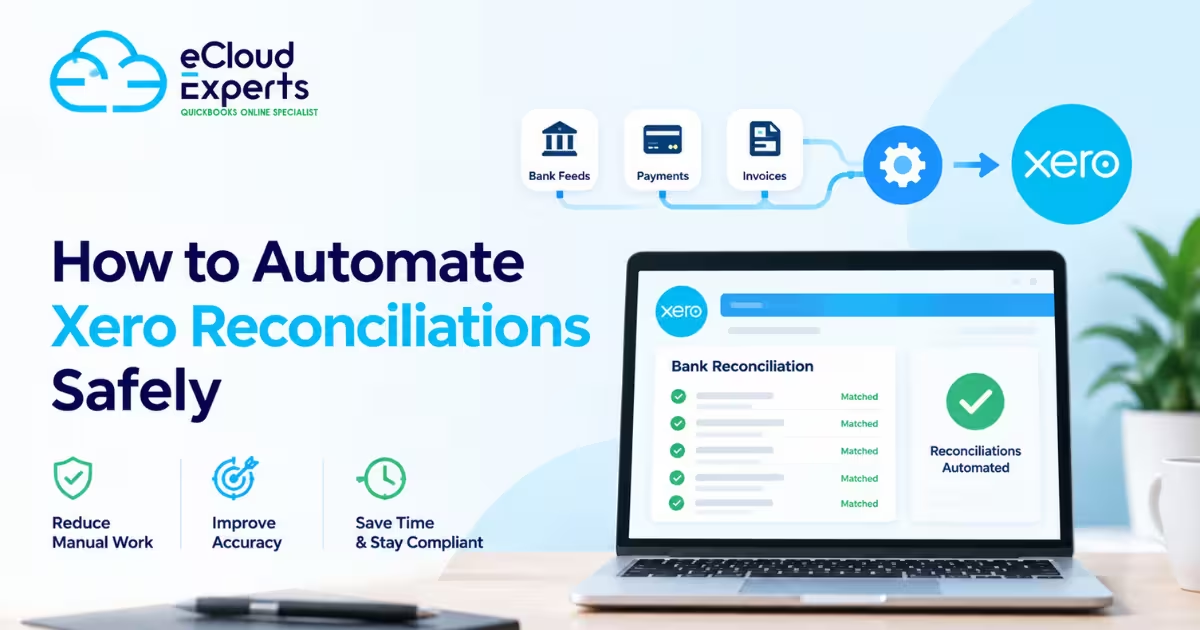
Reconciling means matching Xero transactions to the bank statement and investigating differences. It is one of the most important controls in a cloud bookkeeping process because it confirms that recorded cash activity agrees with the cash actually moving through the business.
A frequent mistake is treating reconciliation as a way to clear a queue. Duplicate transactions, payments allocated to the wrong supplier, missing sales receipts and incorrect transfer coding can all produce misleading reports even when the screen shows few unreconciled items. A regular review should check that bank balances agree, transfers between accounts are matched correctly and unusual payments have been understood.
For a business with high transaction volumes, automation rules can reduce repetitive coding. They need monitoring, however. A rule that was appropriate six months ago may become wrong when a supplier changes its service, VAT treatment or billing method.
Sales and purchase records need to tell the same story
Sales invoices should be raised promptly, sent through a controlled process and followed up before they become overdue. If income is recorded only when money arrives, directors lose visibility over debtors and the cash expected in future weeks. For businesses supplying services on credit, that can make cashflow pressure appear suddenly when it has been developing for months.
Purchase bills should be captured when the cost is incurred, not just when it is paid. This gives a clearer picture of liabilities and profitability for the relevant period. It also helps avoid missed supplier invoices, duplicate payments and distorted margins.
The appropriate process depends on the business. A sole trader with modest costs may use a simpler receipt-led approach. A limited company with staff, credit suppliers and regular client billing will usually need a more structured purchase ledger and approval process.
Xero bookkeeping and UK compliance
Accurate bookkeeping makes compliance far less disruptive, but it must reflect the rules that apply to the business. VAT is a clear example. The correct treatment can vary according to the VAT scheme, the nature of the supply, customer location, timing of tax points and whether expenses include recoverable input VAT.
For businesses registered for Making Tax Digital, records need to be kept digitally and VAT returns submitted from compatible software. Xero supports that process, but the return is only as reliable as the underlying bookkeeping. Reviewing VAT control accounts, checking unusual transactions and resolving coding errors before submission are essential steps.
Payroll and pensions also need to flow into the accounts accurately. Payroll journals should reflect wages, PAYE, National Insurance, pension contributions and any deductions, while payments from the bank are matched to the correct liabilities. For directors, loans, dividends and personal expenses need particular care. Misclassifying these transactions can create confusion in the accounts and complicate tax planning later.
CIS businesses face an additional layer of detail. Contractor and subcontractor records, deductions and verification processes must be maintained correctly, with costs allocated in a way that supports both compliance and project-level reporting.
Turning routine bookkeeping into better decisions
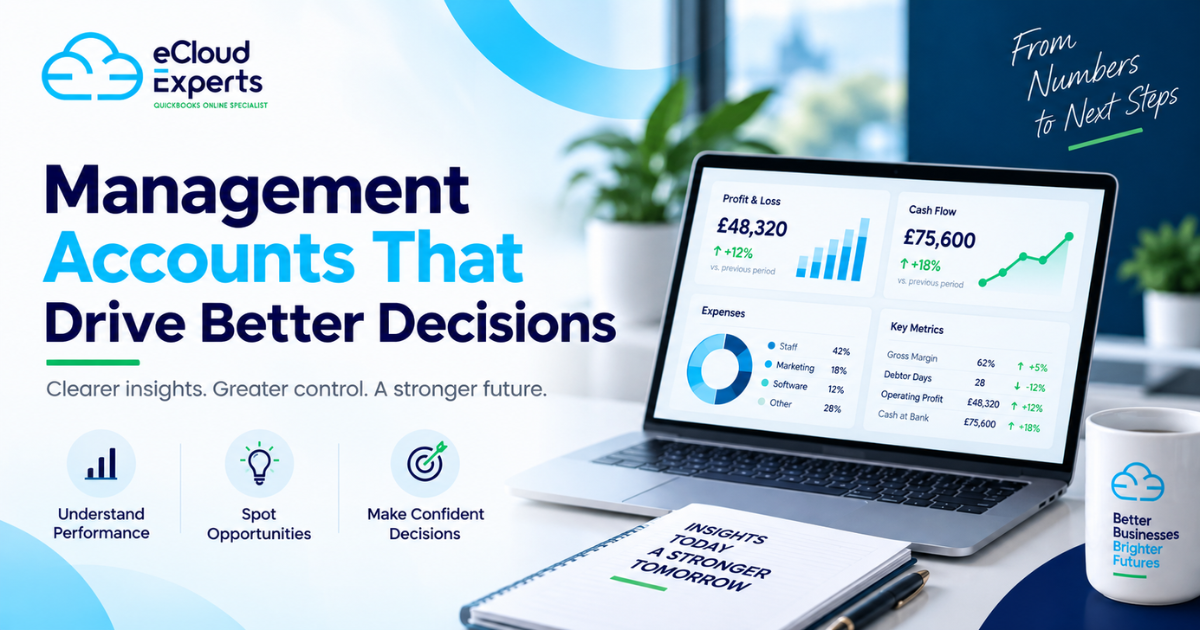
The most useful Xero reports are rarely the longest. A director generally needs a clear profit and loss account, balance sheet, aged debtors, aged creditors and cashflow view, supported by commentary where figures have changed unexpectedly.
The timing matters as much as the reports themselves. If management accounts arrive several months after the period end, they describe history but do little to guide current action. A consistent monthly close gives leaders time to act: chase slow-paying customers, manage supplier commitments, review overspend, protect margins or revise forecasts.
A strong close process normally includes bank and payment-platform reconciliations, review of sales and purchase ledgers, payroll postings, VAT checks, loan and finance account reconciliations, and consideration of accruals or prepayments. Not every business needs every adjustment each month, but the process should match the complexity and risks of the operation.
This is where bookkeeping becomes more than administration. Clean data allows management reporting to show what is changing in the business, rather than forcing the team to debate whether the numbers can be trusted.
When automation helps – and when it does not
Xero can reduce manual work through bank feeds, invoice reminders, recurring invoices, automated bank rules, receipt capture and connected apps. For an owner who is spending evenings entering transactions, the time saving can be significant.
Automation is most effective when the underlying process is stable. If invoices are raised inconsistently, staff use personal cards without submitting receipts or supplier bills arrive through several uncontrolled channels, adding more technology may simply make disorder move faster.
Before introducing apps or complex workflows, map how money enters and leaves the business. Decide who approves spending, where source documents are stored, who chases debt and who reviews exceptions. Then automate the repeatable parts. This approach keeps controls proportionate while giving teams less time managing finances and more time building the business.
Signs your Xero bookkeeping needs attention
A business does not need to wait for an HMRC deadline or year-end accounts to identify a problem. Warning signs include unreconciled bank items that remain for weeks, suspense accounts growing without explanation, VAT liabilities that do not make sense, old invoices marked as paid without a matching receipt, and management reports that no one is comfortable using.
Other signs are more commercial: surprise cash shortages, uncertainty over customer debt, late supplier payments despite healthy reported profits, or an inability to explain why margins have changed. These are often process issues before they become accounting issues.
A review can establish whether the solution is a bookkeeping tidy-up, migration correction, better use of Xero features, staff training or ongoing outsourced support. For growth-stage businesses, the answer is often a combination: reliable day-to-day bookkeeping with a finance partner who can turn the numbers into cashflow forecasts, reporting and informed direction.
Building a finance function that scales
The right level of support changes as a business grows. At an early stage, the priority may be keeping records accurate and VAT returns on time. As transaction volumes rise, responsibilities widen to payroll, debtor control, expense policies, monthly reporting, budgets and cashflow planning. Eventually, directors may need finance director-level challenge without committing to a full-time hire.
That is why a fixed-fee outsourced finance model can be valuable. It gives businesses access to bookkeeping discipline, Xero expertise and commercial insight in a service shaped around their current needs. eCloud Experts supports that progression by combining practical Xero operations with the reporting and finance guidance needed to make decisions with confidence.
The best time to improve your bookkeeping is before the next VAT return, funding conversation or cash crunch forces the issue. Start with accurate records, build a repeatable monthly process, and let the numbers become a useful part of how you run the business.