
Xero for Construction Companies Tracking Costs the Right Way
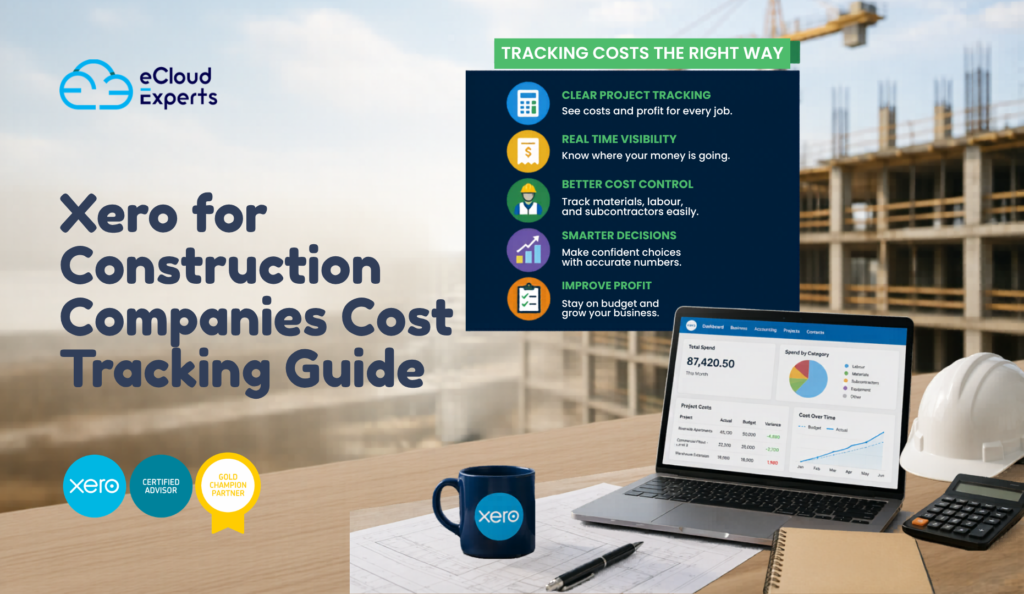
Construction businesses do not struggle because of a lack of projects. They struggle because they cannot clearly see their costs. That is where problems begin. When you are managing multiple sites, handling daily material purchases, and paying workers across different jobs, even small mistakes can lead to big losses. One missing expense or one delayed entry can quietly reduce your profit. This is exactly why Xero for construction companies is becoming a smart choice for builders and contractors who want control over their numbers. Instead of guessing, you get clear and real time visibility into every cost. You know what each project is spending and whether it is actually making money. Let’s go deeper. Why Cost Tracking Is a Big Problem in Construction Construction is fast moving and complex. That makes cost tracking harder than most industries. Here is what usually goes wrong. Multiple projects at onceYou are running several jobs at the same time. Without a clear system, expenses get mixed up and profits become unclear. Material costs keep changingPrices for materials like steel, cement, and fuel change often. If you are not tracking closely, your margins shrink without warning. Labour costs add up quicklyWorkers, subcontractors, and overtime payments can easily go beyond budget if not tracked properly. Hidden expenses are ignoredSmall costs like transport, site supplies, and urgent purchases often go unrecorded. Over time, they reduce your overall profit. This is why many construction companies stay busy but still struggle financially. What Makes Xero for Construction Companies So Useful Now here is the good part. Xero for construction companies gives you a clear and simple way to manage your finances without making things complicated. Real time visibilityYou can see your income and expenses as they happen. This helps you act fast when costs increase. Easy expense trackingUpload receipts, record supplier bills, and match bank transactions quickly. Access from anywhereWhether you are on site or in the office, your data is always available. Works with construction toolsXero connects with apps that help with project tracking, time tracking, and inventory. It gives you control without adding extra work. How Xero for Construction Companies Tracks Costs Step by Step Using Xero is simple. But using it the right way is what gives you real control over your costs. If your setup is wrong, your reports will never be reliable. If your setup is correct, everything starts to make sense. Here is a clear and practical way to use Xero for construction companies to track costs properly. Set up your accounts properlyStart by creating clear cost categories that match how your business runs.This usually includes materials, labour, subcontractors, equipment, and overheads.When your structure is clean, your reports become easy to understand. Use tracking categories for each projectThis is one of the most important steps.Each project should have its own tracking label so you can separate costs and income.Without this, everything gets mixed together. Record every expense on timeDo not wait until the end of the week or month.Enter expenses as they happen and link them to the correct project.This keeps your data accurate and up to date. Manage supplier bills carefullyEnter supplier bills as soon as you receive them.This helps you track what you owe and avoids surprises later.It also keeps your cash flow under control. Track labour and subcontractor costsLabour is one of your biggest expenses.Make sure every payment is assigned to the right job so you can see the true cost of each project. When all of this is done correctly, something important happens. Your numbers stop being confusing.You can clearly see which projects are profitable, where money is being spent, and where you need to take action. That is when Xero for construction companies becomes a powerful tool instead of just another accounting system. Job Costing in Xero for Construction Companies If you are not tracking job costs, you are guessing your profit. That is risky. With Xero for construction companies, job costing becomes much easier and more reliable. What job costing meansIt means tracking every cost linked to a specific project. Why it mattersYou can see early if a project is going over budget. How Xero helpsBy using tracking categories and reports, you can monitor each job separately. For more advanced needs, you can connect apps that give deeper insights into project performance. Best Xero Add Ons for Construction Cost Tracking Sometimes, you need more than basic features. That is where add ons come in. Here are some useful options for Xero for construction companies. Project tracking toolsHelp you manage budgets, timelines, and job performance. Inventory management toolsTrack materials and control stock across different sites. Time tracking appsRecord worker hours and assign them to specific projects. Choosing the right tools depends on how complex your business is. Common Mistakes Construction Companies Make with Xero Many businesses use Xero, but not correctly. Here are some common mistakes to avoid. Not using tracking categoriesWithout this, you cannot separate project costs properly. Mixing personal and business expensesThis leads to confusion and incorrect reports. Poor setup from the startIf your system is not set up properly, everything becomes harder later. Ignoring financial reportsXero provides useful insights, but many businesses never review them. Fixing these mistakes can quickly improve your financial control. Real Benefits of Using Xero for Construction Companies Once everything is set up properly, the impact is clear. Better profit controlYou know which projects are making money and which are not. Clear project visibilityYou can track every job without confusion. Faster decision makingYou can respond quickly when costs increase. Less manual workAutomation reduces errors and saves time. This is how construction businesses stay competitive and profitable. How eCloud Experts Help You Set Up Xero Properly Setting up Xero may look easy at first. But getting it right for a construction business takes real experience. That is where eCloud Experts make a difference. We do not just install software. We build a complete system around your business so you can track costs clearly and stay in control. Here is how we
How Long Does a Xero Migration Really Take
You are probably asking one simple question. How long does a Xero migration take And the honest answer is this. It depends. But not in a vague or confusing way. Some businesses move in just a few days. Others take a couple of weeks. In more complex cases, it can take close to a month. The difference comes down to a few key things. Your data quality, your current setup, and how prepared you are before the migration begins. Here is where most people get it wrong. They think migration is just a quick data upload. But a proper move to Xero involves planning, checking, and validation. If done badly, it creates errors that take longer to fix later. That is why understanding the real timeline matters. This guide gives you a clear breakdown of the Xero migration timeline, what affects it, and how to avoid delays. How Long Does a Xero Migration Take on Average Most businesses fall into a simple timeline range. But the exact timing depends on how clean and organised your data is before the process begins. Here is a realistic breakdown: These timelines are based on real migration projects, not guesswork. But here is the key point. Your time to migrate to Xero is not just about business size. It is about data quality. If your books are clean, structured, and up to date, the migration moves quickly with fewer checks needed. On the other hand, if your records are messy, incomplete, or inconsistent, the process slows down. Extra time is needed to fix errors, balance accounts, and make sure everything matches correctly after migration. So while the timeline may look simple on paper, the real speed depends on how prepared your data is before you start. What Actually Happens During a Xero Migration Many people think it is just a simple transfer. Upload your data and start using Xero. But in reality, a proper Xero data migration process follows a structured approach to protect your financial accuracy. It is not just about moving data. It is about making sure everything is correct, complete, and ready for real use. Here is what actually happens behind the scenes: Let’s break this down a bit further. First, your existing system is reviewed. This helps identify what data needs to be moved and what can be left behind. It also highlights any issues early. Next comes data preparation. This is where most of the real work happens. Errors are fixed, duplicates are removed, and missing information is completed. Clean data is the foundation of a successful migration. Then the actual transfer takes place. Your financial data is moved into Xero in a structured format so it fits correctly within the system. After that, everything is checked. Reports like your balance sheet and profit and loss are compared with your old system to make sure nothing is missing or incorrect. Finally, the system is set up for daily use. This includes bank feeds, user access, and any tools your business relies on. Each of these steps plays a critical role. Skip or rush even one step, and you risk ending up with incorrect numbers, broken reports, or missing transactions. Fixing those issues later takes more time and effort than doing it right from the start. Xero Migration Timeline Breakdown Step by Step Now let’s break down exactly how long to switch to Xero. Step 1 Review and Planning Time: 1 to 2 days This stage sets the foundation. You review your current system and decide: Good planning reduces delays later. Step 2 Data Preparation Time: 2 to 5 days This is often the most time consuming part. Your data is cleaned and corrected. Common issues include: The cleaner your data, the shorter your Xero migration duration. Step 3 Data Migration Time: 1 to 3 days This is where the actual transfer happens. Data moved includes: If everything is prepared well, this step is fast. Step 4 Testing and Validation Time: 1 to 3 days This step checks accuracy. Reports in Xero are compared with your old system: If something does not match, it is fixed here. Step 5 Final Setup and Go Live Time: 1 to 2 days Now everything is ready. Final setup includes: At this point, your business starts using Xero fully. What Affects How Long a Xero Migration Takes Still wondering how long does a Xero migration take for your business Here are the real factors. Data Volume More transactions mean more work. A business with years of data will take longer than one with a few months. Data Quality Clean data speeds things up. Messy data slows everything down. Number of Years Migrated Moving one year is quick. Moving multiple years takes more time and checking. Business Complexity If your business uses: Then your Xero migration timeline increases. Integrations Connecting tools like ecommerce platforms or CRM systems adds extra steps. Industry Requirements Some industries need detailed reporting and compliance checks. This adds time but improves accuracy. QuickBooks Sage or Excel to Xero How Timelines Compare Your starting system plays a big role. QuickBooks to Xero Sage to Xero Excel to Xero So when asking how long a Xero migration takes, your current system matters. Fast vs Slow Xero Migration What Causes Delays Let’s be direct. Most delays are avoidable. Here are the common reasons: A rushed migration often leads to errors. Fixing those errors takes more time later. How to Speed Up Your Xero Migration If you want a faster time to migrate to Xero, focus on preparation. Speed comes from clarity and preparation. Real Example Xero Migration Timeline Let’s look at a real scenario. ProblemA retail business had two years of messy QuickBooks data. ActionData was cleaned first, then migrated with proper checks. Result This shows that even complex cases can be handled efficiently with the right approach. Is a Fast Xero Migration Always Better Not always. A fast migration might sound appealing, especially if you want to switch systems quickly. But speed
When Is the Best Time of Year to Switch to Xero
Let’s be honest. Most business owners delay this decision longer than they should. You already know your current system is not working well. Reports take too long. Errors keep showing up. And you spend more time fixing numbers than using them. But then one question keeps coming back. What is the best time to switch to Xero? Here is the truth. There is no single perfect date for everyone. But there are smart times and bad times. Choosing the right moment can save you a lot of stress, time, and money. If you switch at the wrong time, you can end up with messy data, confusing reports, and double work. On the other hand, if you choose the best time to switch to Xero, everything feels clean, simple, and under control from day one. In this guide, you will learn exactly when to switch, when to wait, and how to make the move the right way. Why Timing Matters When You Switch to Xero You might think you can switch accounting software anytime. Technically, yes. But in reality, timing changes everything. Switching at the wrong time can cause: That is where many businesses struggle. Not because Xero is difficult. But because the timing was poorly chosen. Now flip that. When you pick the best time to switch to Xero, you get: Think of it like moving into a new house. If everything is packed and organized, life feels easy. If not, you spend weeks fixing the mess. The Best Time to Switch to Xero for Most Businesses For most businesses, the best time to switch to Xero is at the end of a financial year. This timing gives you a clean break between your old system and your new one. Instead of mixing old data with a new setup, you start fresh with clear and accurate records, which immediately reduces confusion and extra work. There is a practical reason why this works so well. At the end of the financial year, your accounts are already being reviewed, finalized, and closed. That means your numbers are clean and verified before they move into Xero. You are not transferring incomplete or uncertain data, which lowers the risk of errors during migration. Another key benefit is reporting clarity. When you begin using Xero at the start of a new financial year, all your reports start from a clean point. This makes it much easier to track performance, compare results, and understand how your business is growing without mixing old system data with new records. This timing also makes life easier for your accountant or finance team. They do not need to deal with split periods or match data across two systems. Everything begins in one place, which helps with accuracy and saves time during reviews, audits, or tax preparation. Because of these advantages, many experts consider year end migration the best time to switch to Xero. It is simple, clean, and reduces the chances of mistakes. However, business does not always follow perfect timing. If your current system is slowing you down or causing issues, waiting for year end may not be the best option. So what should you do if you cannot wait? Switching at Financial Year End If you can plan ahead, this is your best option. Switching at the financial year end allows you to close your books in your current system and then start fresh in Xero without carrying over confusion or incomplete data. This timing works well because everything is already being finalized. Your accounts are reviewed, balances are confirmed, and reports are complete. As a result, you avoid duplicate work and reduce the risk of errors during migration. You also begin with clean opening balances, which makes your future reporting more accurate and easier to understand. Another important benefit is tax reporting. Since your financial year is complete, your accountant can work with a clear set of records without needing to match data across two systems. This reduces confusion and saves time during audits or filings. If your financial year ends in June, December, or March, that period becomes your ideal time to switch. Planning your move around this point gives you the cleanest and most controlled transition. Switching at Month End or Quarter End Now let’s be realistic. Sometimes waiting months is not practical. Your current system might be slowing you down. Reports may not be reliable. Or you may be spending too much time on manual work that should be automated. In these situations, waiting for financial year end can actually hold your business back. In that case, the best time to switch to Xero becomes the end of a month or quarter. This still gives you structure and a clear cut off point, which helps keep your data organized. Switching at month end or quarter end allows you to close a short period cleanly before moving to Xero. This makes it easier to track transactions, reconcile accounts, and maintain accurate reports. While it may not be as perfect as a year end switch, it still offers a practical and reliable solution. For many growing businesses, this is the right choice. It allows you to improve your systems now instead of waiting, while still keeping your financial data clear and manageable. When NOT to Switch to Xero Now here is where things can go wrong. Switching at the wrong time can create more problems than it solves. During Peak Business Periods If your business is busy, do not switch. For example: You will not have time to check your data properly. Mistakes can happen quickly. During Tax or Filing Periods This is a risky time to switch. You need consistent data for tax filings. Any mismatch can cause serious issues. Finish your reporting first. Then plan your move. When Your Books Are Messy Switching software does not fix bad data. If your records are incorrect, you will just move the same problems into Xero. Instead: Then switch with confidence. Real Life Scenarios Let’s break
Xero Reports Explained Profit Cash Flow and Performance
Xero reports are one of the most powerful tools inside your accounting system. Yet most business owners barely use them properly. They glance at revenue, check the bank balance, and assume everything is fine. That is risky. If you do not understand your numbers, you are making decisions in the dark. Sales alone do not mean success. Profit does not always mean cash. Growth can even create pressure if it is not controlled. This is where Xero reports become critical. They turn daily transactions into clear financial insight. They show what is working, what is draining money, and where problems are building. When used properly, Xero reports help you lead with confidence instead of guesswork. The real danger is not a lack of effort. It is a lack of visibility. Many businesses grow quickly but fail to monitor margins, expenses, and cash movement closely. They assume strong sales mean strong performance. In reality, rising costs, unpaid invoices, or increasing debt can quietly weaken the business. Xero reports help uncover these issues before they become serious. When you review Xero reports consistently, you begin to see patterns. You notice whether expenses are increasing month after month. and see if customers are taking longer to pay. You understand whether profits are stable or shrinking. These insights allow you to make informed decisions about hiring, pricing, investment, and expansion. Another key point is timing. Financial data only helps if you review it regularly. Waiting until the end of the year is too late. Monthly review of Xero reports gives you control. It allows you to correct small problems early instead of facing large financial surprises later. In this guide, you will learn how to read profit, cash flow, and performance reports in simple language. You will understand what each report shows, what numbers matter most, and how to use Xero reports to run your business with clarity and confidence. No confusion. No technical language. Just practical insight you can apply immediately. What Are Xero Reports and Why They Matter Xero reports are structured summaries created from your financial data. Every invoice, bill, payment, expense, and bank transaction feeds into them automatically. Instead of scrolling through hundreds of entries, Xero reports organize everything into clear, readable insights. Think of them as your business health check. Just like a medical report shows blood pressure and heart rate, Xero reports show profit, cash position, and financial strength. They help you understand not just where your business stands today, but where it is heading. The core Xero financial reports include the profit and loss report, the cash flow report, the balance sheet report, aged receivables and payables, and management summary reports. Each of these Xero reports serves a different purpose, and together they provide a complete financial picture. The profit and loss report answers a simple but critical question: Are you making money? It shows your revenue, costs, and final profit over a specific period. The cash flow report answers a more urgent question: Do you actually have money available? It tracks real cash moving in and out of your business. This matters because profit on paper does not always mean cash in the bank. The balance sheet report answers another key question: How strong is your financial position today? It shows what your business owns, what it owes, and what is left for the owner. Many business owners focus only on revenue. That is a mistake. Revenue can grow while profit shrinks. Profit can look healthy while cash becomes tight. Strong businesses monitor all three areas through Xero reports, not just sales figures. When you review Xero reports regularly, you start spotting trends early. You notice rising costs before they damage margins. and identify slow paying customers before cash flow becomes a problem. You see debt levels increasing before they create pressure. In short, Xero reports give you visibility. And visibility gives you control. Numbers always tell a story. But they only help if you take the time to read and understand them. Understanding the Xero Profit and Loss Report The Xero profit and loss report shows income, expenses, and net profit over a selected period. It is often the first of the Xero reports that business owners review because it quickly answers the big question: Are we making money? At first glance, it looks simple. Revenue at the top, expenses underneath, profit at the bottom. But this report deserves careful attention. Small changes inside it can signal big shifts in performance. The report includes revenue, which is the money earned from sales. This shows how much you billed or invoiced during the period. Strong revenue growth can look impressive, but it only tells part of the story. Next is cost of goods sold. These are the direct costs tied to delivering your product or service. For example, materials, subcontractor costs, or direct labor. Subtracting these from revenue gives you gross profit. Gross profit shows how efficient your core operations are. If gross profit margins shrink, it may mean rising supplier costs or pricing issues. Below that are operating expenses. These include rent, salaries, software subscriptions, marketing costs, utilities, insurance, and other overhead expenses. These costs keep the business running, but if they grow too fast, they can quietly eat into profits. Finally, you see net profit. This is the amount left after all expenses are deducted. It represents the true earnings of the business during that period. Now here is the key insight. High revenue does not guarantee strong profit. A business can increase sales but lose efficiency. If costs rise faster than income, margins shrink quietly. Many growing businesses fall into this trap. They celebrate higher sales while profitability weakens in the background. When reviewing Xero reports like the profit and loss report, focus on gross profit margin percentage and net profit margin percentage. These ratios reveal whether you are becoming more or less efficient over time. Also review which expense categories are increasing and compare month to month performance. A single month
How to Prepare Your Data Before Moving to Xero
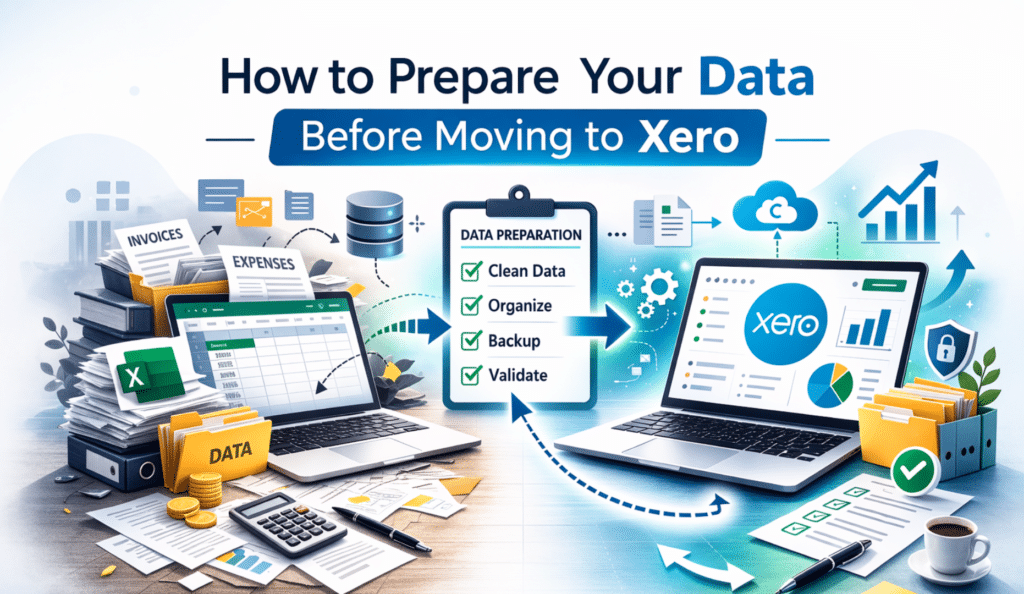
Moving to Xero is a smart step for any growing business. It gives you better visibility, real time reporting, and smoother financial management. You can access your numbers anytime, connect your bank feeds automatically, and generate clear financial reports within seconds. For many business owners, switching to Xero feels like upgrading from a basic tool to a powerful control center. But here is the truth. Most migration problems do not happen because of Xero. They happen because the data was not properly prepared before the move. If your current accounting system contains errors, duplicate records, unreconciled bank accounts, or incorrect tax settings, those problems will not disappear during migration. They will simply move into Xero with you. That is why preparation is not just an optional step. It is the foundation of a successful migration. When you prepare for Xero migration properly, you protect your financial accuracy, avoid reporting issues, and reduce the risk of compliance problems. Clean data ensures your balance sheet, profit and loss statement, VAT reports, and cash flow figures are reliable from day one. Many businesses underestimate this stage. They focus on exporting files and importing balances, but ignore the deeper review required before migration. A rushed migration often leads to mismatched opening balances, incorrect customer and supplier totals, tax coding errors, and weeks of post migration adjustments. Fixing those issues later is always more expensive and time consuming than preparing correctly in advance. Preparing your data also gives you an opportunity to reset your accounting structure. You can simplify your chart of accounts, remove old unused contacts, clear duplicate transactions, and clean historical errors. Instead of carrying clutter into a new system, you start fresh with organized and structured financial records. If you want a clean setup and accurate reports from day one, you must prepare for Xero migration the right way. That means reviewing your financial health, reconciling accounts, validating balances, and planning your migration date carefully. It also means deciding how much historical data you truly need and ensuring your tax settings are fully correct before the move. This guide will walk you through it step by step in simple language. By the end, you will understand exactly how to prepare for Xero migration properly and how to avoid the common mistakes that cause stress after switching systems. Why Data Preparation Matters Before Xero Migration Think of migration like moving to a new office. If you pack everything without sorting, you carry junk with you. Old files, broken equipment, and things you no longer use take up space in your new workplace. The move feels bigger than it needs to be, and the mess follows you. The same applies to your accounting data. If your records are messy, incomplete, or incorrect, those problems will follow you into Xero. Migration does not clean your data. It transfers it. That means duplicate contacts, unreconciled bank accounts, incorrect VAT codes, and wrong opening balances will still exist after the switch. Many businesses assume the new system will somehow fix past issues. It will not. Xero is powerful, but it works based on the information you provide. If that information is flawed, your reports, dashboards, and financial insights will also be flawed. When you prepare for Xero migration properly, you reduce serious risks. You avoid reporting errors that can distort your profit figures. and prevent duplicate transactions that can inflate income or expenses. and save time during setup because your data is already structured and verified. You reduce migration costs since fewer corrections are needed after transfer. Most importantly, you start with clean financial records that you can trust. Accurate preparation also protects compliance. Tax reporting depends on correct historical data. If VAT or sales tax settings are wrong before migration, your future filings may be affected. Cleaning and validating data beforehand ensures that your reporting remains consistent and defensible. There is also a strategic benefit. Preparing your data gives you a chance to review how your accounts are structured. You can simplify categories, remove unused accounts, and improve clarity in your reporting. Instead of carrying years of clutter into Xero, you begin with a cleaner financial framework. In short, preparation is not just a technical task. It is a financial reset. When you prepare for Xero migration carefully, you set your business up for stronger reporting, clearer insights, and better decision making from the very first day in the new system. Now let us look at how to do it properly. Step 1: Review Your Current Accounting System Before anything else, understand what you are working with. Ask yourself: Run the main reports: Check if the numbers make sense. If something looks wrong now, it will still be wrong after migration. Fix issues before moving forward. Step 2: Clean Up Your Chart of Accounts Your chart of accounts is the backbone of your accounting system. Many businesses have: Before you prepare for Xero migration, simplify and clean this list. Do this: A clean chart of accounts means better reporting in Xero. Keep it simple. If you have three accounts for office supplies, you probably only need one. Step 3: Reconcile All Bank and Credit Card Accounts This is critical. All bank and credit card accounts must be fully reconciled up to your migration date. Check: If your bank balance in the system does not match the real bank statement, fix it before moving. Starting Xero with incorrect balances creates long term reporting problems. Step 4: Review Accounts Receivable and Payable Your customer and supplier balances must be accurate. For customers: For suppliers: If you migrate incorrect balances, you will spend months trying to fix them later. Clean data now saves stress later. Step 5: Decide What Historical Data to Migrate You do not always need to move everything. Ask yourself: Many businesses choose to migrate: The more history you migrate, the more complex the process becomes. If your old system has years of messy data, sometimes less is more. Step 6: Fix Tax Settings and
Xero vs Sage Which Accounting Software Makes More Sense for Growing Businesses
Choosing accounting software is one of those decisions that feels simple at first but quietly shapes your business for years. It controls how you track money, how clearly you understand profits, and how confidently you plan growth. Many businesses rush this step because both tools look capable on the surface. That is why the Xero vs Sage comparison matters so much. Both platforms are trusted and widely used. Both are recommended by accountants. Yet they are built with very different users in mind. One focuses on simplicity and visibility. The other focuses on structure and control. When businesses choose the wrong fit, the result is not just frustration. It often leads to messy records, unclear reports, and costly fixes later. This guide explains Xero vs Sage in clear and simple language. No technical talk. No sales hype. Just real differences that help you decide which accounting software actually makes sense for how your business works today and how it may grow tomorrow. What Is Xero Xero is a cloud based accounting platform designed mainly for small and medium sized businesses. It focuses on giving business owners a clear picture of their finances without requiring deep accounting knowledge. The layout is clean, the navigation is simple, and most users can start using it confidently in a short time. Xero works especially well for businesses that want to stay involved in their own finances. Invoices, bank transactions, and reports are easy to find and understand. Automation handles many repetitive tasks, which reduces manual work and errors. Because everything updates in real time, business owners always know where they stand financially. Xero is popular with startups, service businesses, ecommerce companies, and teams that work remotely. Its design encourages regular use rather than avoiding the accounts until month end. What Is Sage Sage is one of the oldest and most established names in accounting software. It offers several products, including cloud and desktop options, designed to support a wide range of business sizes and industries. In most comparisons with Xero, Sage Business Cloud and Sage 50 are the usual reference points. Sage focuses on structure, detailed control, and traditional accounting processes. It is often chosen by businesses with more complex needs, such as stock management or detailed reporting requirements. The system offers powerful tools but expects users to understand accounting principles or receive training. Many manufacturing, wholesale, and product based businesses choose Sage because it handles complexity well. While it can feel heavier to use at first, it offers depth that some growing businesses need as operations become more detailed. Xero vs Sage Ease of Use Ease of use is one of the biggest differences in the Xero vs Sage comparison. Xero is built for everyday users. The dashboard shows key figures clearly, such as cash balance, invoices owed, and bills to pay. Tasks follow a logical flow, which helps users feel confident even without accounting experience. Sage takes a more traditional approach. Screens often contain more options and settings, which can feel overwhelming at first. While this structure supports accuracy and control, it usually requires training before users feel comfortable moving quickly through tasks. For small teams or owners managing their own accounts, Xero generally feels easier and less intimidating. For businesses with trained finance staff, Sage can be efficient once properly set up. Xero vs Sage Features Compared When comparing features, it becomes clear that Xero and Sage prioritise different things. Xero focuses on speed, automation, and clarity. Invoicing is simple, reminders can be automated, and payments are easy to track. Bank feeds update frequently, and reconciliation is fast, which encourages regular financial checks. Sage offers strong invoicing too, but with more structure and control. This suits businesses that require specific invoice layouts or approval processes. Bank feeds are available, though setup and matching may feel slower depending on the version used. Inventory management is an area where Sage stands out. It provides more detailed stock tracking, costing, and reporting tools. Xero includes basic inventory features, which work well for simple product tracking but may struggle with complex stock requirements. Multi currency support is available in both systems, though Xero tends to present this information in a clearer and more accessible way for everyday users. Xero vs Sage Pricing Comparison Pricing is often a deciding factor, but it is important to look beyond the headline numbers. Xero uses a monthly subscription model with clear tiers. As you move up plans, more features become available. Costs are predictable, which helps businesses budget confidently. Sage pricing can vary more depending on the product and setup. Some versions charge per user, while others require additional features to be added separately. Desktop options may involve higher setup costs and ongoing maintenance. Hidden costs often appear in training time, additional users, or required add ons. For many growing businesses, Xero offers a clearer and more predictable pricing path, while Sage may suit those willing to invest more in structure and setup. Xero vs Sage for Small Businesses Small businesses usually want clarity, control, and low administrative effort. Xero fits this need well because it allows owners to stay involved without feeling overwhelmed. Reports are easy to understand, and daily tasks do not require specialist knowledge. Sage works better for small businesses with specific operational needs, such as managing stock or maintaining strict internal controls. If a business already has a bookkeeper or finance staff, Sage can support more complex processes from an early stage. In simple terms, Xero suits businesses that want simplicity and visibility. Sage suits businesses that need structure and are comfortable with more detailed systems. Xero vs Sage for Accountants and Advisors Accountant collaboration is an important part of the Xero vs Sage decision. Xero is designed to make this relationship smooth. Accountants can log in at any time, review data in real time, and make adjustments without interrupting daily operations. Sage also supports accountant access, but the experience can vary depending on whether the business uses a cloud or desktop version. Desktop
Xero Migration Mistakes That Cost Businesses Time and Money
Xero migration mistakes usually begin with good intentions. A growing business wants better visibility, cleaner reports, and stronger control over cash flow. As transactions increase, the old system starts to feel restrictive. Xero appears to be the logical next step because accountants recommend it widely and many businesses trust it. However, many companies rush the move or follow poor advice. What starts as a smart upgrade quickly turns into weeks of confusion, broken reports, and wasted money. Xero itself is not the problem. The way businesses handle the migration causes the damage. Many owners believe moving to Xero only involves exporting data and importing it into a new system. In reality, the process is far more complex. Every invoice, bill, payment, journal, tax setting, and account structure directly shapes how future reports behave. When teams handle even small details incorrectly, the effects spread across the entire system. Moving to Xero does more than change software. It resets the financial foundation of the business. Every number you bring across supports future decisions. Profit reports influence pricing and hiring. Cash flow reports guide spending and investment. VAT and tax reports determine compliance and penalties. When balances are wrong, reports become unreliable. When teams map tax codes incorrectly, they put compliance at risk. These issues go far beyond appearance. They directly affect how confidently business owners run their companies. Timing creates the biggest risk. Many Xero migration mistakes do not appear straight away. The system opens. Invoices send successfully. Bank feeds connect. Reports load without errors. Everything seems fine at first. Months later, issues begin to surface. A VAT return fails to match expectations. Profit appears unusually high or low. Cash flow forecasts stop making sense. By then, decision makers have already relied on inaccurate numbers. The same patterns show up repeatedly across different industries. Many businesses attempt the migration themselves to save money. Others follow generic online guides that overlook real world accounting complexity. Some assume that easy to use software guarantees an easy migration. In many cases, the system works on a technical level, but the financial data fails to tell the truth. The real cost of Xero migration mistakes extends far beyond the initial migration fee. Teams lose time fixing issues that should never have existed. Accountants spend hours untangling data months after the switch. Stress builds as business owners lose trust in their reports and start questioning the numbers. The most damaging result is hesitation. When confidence in financial data disappears, every decision slows down and feels riskier. This guide breaks down the most common Xero migration mistakes in plain language. It explains what goes wrong, why it happens, and how those mistakes affect everyday business decisions. More importantly, it shows how to avoid these problems before they cost time, money, and confidence in your financial data. Why Xero Migrations Go Wrong in the First Place Xero itself is not the problem. Most Xero migration mistakes happen because the move is treated as a technical task instead of a financial one. Software can move data but it cannot judge whether that data makes sense. Poor planning is one of the biggest causes. Many businesses start without deciding what data should move, what should stay and how reporting should look after the switch. Without a plan every decision becomes reactive and errors multiply. Another issue is underestimating complexity. Years of transactions, custom accounts, legacy VAT rules and half used apps do not move cleanly by default. When this complexity is ignored Xero data migration issues appear quickly. DIY migrations also create risk. Online tutorials focus on button clicks not balance validation or reporting accuracy. They rarely explain what happens when something goes wrong. Finally many businesses rely on advice from people who are not migration specialists. General accountants and IT support often mean well but Xero migration problems require specific experience to spot risks early. When these factors combine, Xero migration mistakes become almost inevitable. Xero Migration Mistake 1 Starting Without a Clear Migration Plan This is where most Xero migration mistakes begin. Businesses jump in without answering basic questions. What data is moving. What reports matter most. When should Xero go live. Without a clear plan the migration becomes guesswork. Choosing the wrong conversion date breaks comparisons. Migrating too much data slows performance. Migrating too little removes reporting context. A proper plan defines scope timelines responsibilities and validation steps before any data moves. When this step is skipped, delays extra costs and frustration follow. Xero Migration Mistake 2 Migrating Bad or Incomplete Data Many Xero migration mistakes come from moving problems instead of fixing them. Old systems often contain duplicate contacts, unused accounts and unreconciled balances. Migrating this data does not clean it. It locks the problems into the new system. The result is confusing reports. Profit figures feel wrong. Aged receivables do not match reality. Bank balances refuse to reconcile. These Xero data migration issues can take months to fix. Cleaning data before migration saves time reduces risk and builds trust in the numbers from day one. Xero Migration Mistake 3 Incorrect Opening Balances This is one of the most expensive Xero migration mistakes. Opening balances are the foundation of your new Xero file. If they are wrong everything that follows is unreliable. Common issues include missing journals, incorrect retained earnings and wrong VAT balances. These errors affect profit tax and cash flow reporting. Many businesses only notice when filings do not match expectations. Professional migrations always reconcile opening balances back to the old system. This step is essential. Xero Migration Mistake 4 Losing Historical Data That Still Matters Some businesses migrate everything. Others migrate almost nothing. Both approaches can cause problems. Migrating full history without planning can clutter reports and slow performance. Migrating too little removes context needed for trend analysis audits and tax reviews. Xero migration mistakes happen when businesses fail to decide what historical data still adds value. A balanced approach keeps critical information while avoiding unnecessary noise. Xero Migration Mistake 5 Mapping Errors
What Happens During a Professional Xero Migration
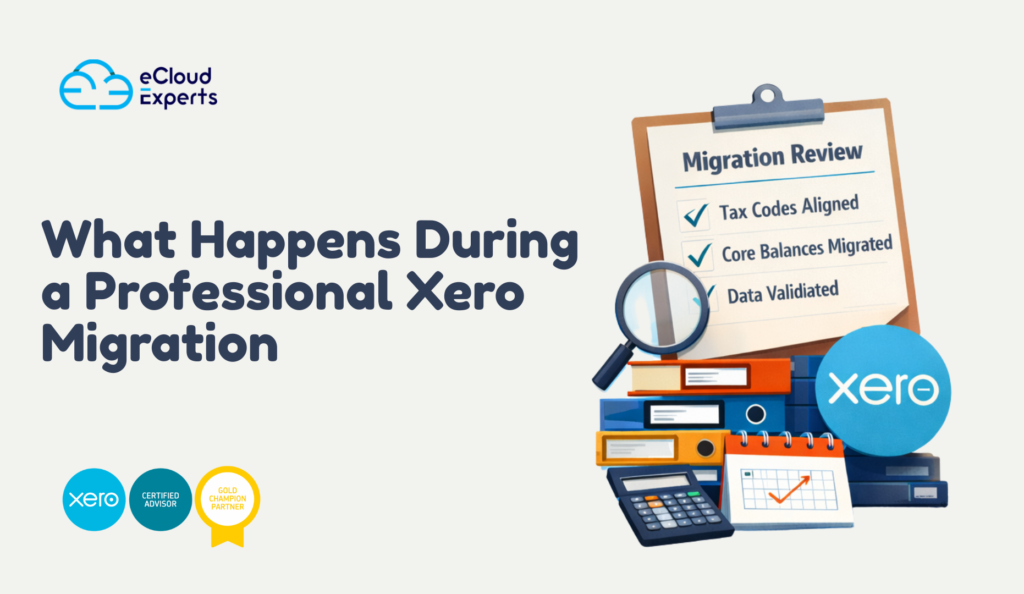
Switching accounting software often looks like a simple technical change. In reality, it is a financial decision that can quietly affect reporting, compliance, and confidence for years. That is exactly why a professional Xero migration exists. When businesses rush the move, the damage is rarely obvious on day one. The dashboard loads, invoices appear, and the bank feeds connect. Then the real test begins. VAT returns need to be filed. Month-end reports need to match the old system. The accountant asks for reconciliations. This is where small mistakes become big problems. A professional Xero migration protects the accuracy of your numbers while you change systems. It is not only about getting data into Xero. It is about making sure the data makes sense once it is there. That includes making sure opening balances are correct, VAT treatment is consistent, contacts are clean, and historical transactions do not distort reports. In other words, it protects the financial story behind your business, so your reports still tell the truth after the switch. It also reduces disruption. During a professional Xero migration, the process is planned around how your business runs day to day. Sales invoices still need to go out. Bills still need to be paid. Bank transactions still need to be matched. Without a structured plan, teams end up duplicating work across two systems, missing transactions, or making rushed decisions that cause long-term reporting issues. Most importantly, a professional Xero migration is built on validation. Professionals do not rely on “it looks right.” They compare trial balances, check VAT codes, confirm bank positions, and verify key reports before the system goes live. This is what stops silent errors from sitting in your books for months. It also means you can hand over Xero to your accountant, investors, or finance team with confidence, knowing the numbers are reliable. This guide explains what actually happens during a professional Xero migration, step by step. You will see how the process is planned, how data is cleaned, what gets migrated, how r esults are checked, and what support looks like after go-live. By the end, you will know exactly what you are paying for and why professional help often costs less than fixing a failed DIY migration. If you plan to move to Xero, start with a professional migration review before touching any data. That single step can save weeks of clean-up work later. What a Professional Xero Migration Really Means Many people assume migration is simply about transferring data from one system to another. That assumption is the root cause of most failed setups. A professional Xero migration is not a technical export and import exercise. It is a structured financial process that examines how your data was created, how your team has used it over time, and how it must behave once it moves into Xero. Accounting platforms may look similar on the surface, but they store, calculate, and report data in very different ways. During a professional Xero migration, specialists track how transactions move through your current system, from the moment you raise an invoice to how it affects reports, VAT, and balances. They look at posting logic, tax treatment, rounding rules, and historical adjustments that may not be obvious at first glance. This step is critical because moving data without understanding its behaviour almost always leads to distorted reports, incorrect balances, and VAT figures that appear correct but are technically wrong. Another key difference is control and accountability. A professional Xero migration includes checks at every stage, not just a final review. Data is validated as it is prepared, again after it is migrated, and once more before the system goes live. Trial balances are compared, tax codes are tested, and reports are reviewed against the old system. Nothing relies on assumptions, visual checks, or “close enough” comparisons. A professional Xero migration also involves decision-making, not blind copying. Specialists decide which historical data adds value and which data creates noise. They assess whether certain legacy transactions should be migrated, summarised, or left behind to protect reporting clarity. This ensures Xero starts as a clean, usable system rather than a replica of old problems in a new interface. If reliable reporting matters to your business, this is not an area where shortcuts pay off. A professional Xero migration exists to make sure your numbers remain accurate, your reports stay meaningful, and your confidence in the system is justified from day one. When a Business Should Choose a Professional Xero Migration Not every business faces the same level of risk when switching accounting software, but many underestimate how quickly small issues can turn into serious problems. A professional Xero migration becomes essential when financial accuracy directly affects decisions, compliance, or future growth. Minor balance differences or misplaced tax codes can quietly undermine reports and lead to costly corrections months later. Businesses with several years of historical data face even greater risk. The more history you carry, the more likely old adjustments, manual entries, or legacy errors will behave differently once you move them into Xero. A professional Xero migration helps teams identify which historical data adds value and which creates confusion, ensuring reports stay clear and reliable after the switch. VAT obligations also raise the stakes.Businesses often miss incorrect VAT treatment until they prepare returns or an accountant or authority reviews them. A professional Xero migration aligns tax codes, rates, and historical VAT figures correctly from the start, reducing the risk of rework, penalties, and uncomfortable conversations later. The same applies to businesses with multiple users or departments relying on financial information. When different people depend on reports for pricing, budgeting, or cash flow planning, even small inaccuracies can lead to poor decisions. A professional Xero migration protects the integrity of shared data so everyone is working from the same, reliable numbers. Growth plans add another layer of risk. Businesses preparing to scale, apply for funding, bring in investors, or face an audit cannot afford uncertainty in their books. A professional Xero
Xero for Small Businesses Is It the Right Fit
Running a small business means juggling sales, customers, cash flow, suppliers, and compliance at the same time. Every decision affects time and money. Accounting software should reduce pressure and bring clarity, not create more work. Yet many small business owners start with tools that feel right early on but slowly become a barrier as the business grows. What once handled basic invoicing and expenses can start to feel limiting. Reports may not show the full picture. Cash flow becomes harder to track. Simple questions like how much profit you are making or who still owes you money take longer to answer. This is often the point where business owners begin to look for a better system. Xero for small businesses often comes up during this search. Accountants recommend it because it supports accurate reporting and collaboration. Business owners hear about it from peers who want better control over their numbers. However, popularity alone does not make it the right choice for every business. Software that works well for one company may cause frustration for another if the fit is wrong. This guide explains Xero for small businesses in plain language. It looks beyond marketing claims and focuses on real day to day use. You will learn what Xero does well, where it may not suit certain businesses, and what signs to look for when deciding if it fits how your business actually operates today. Thinking about upgrading your accounting software. Let eCloud Experts help you decide if Xero is the right fit for your business today. What Is Xero and Why Small Businesses Consider It Xero is cloud based accounting software built for small and growing businesses that want better control over their finances. Because it runs entirely online, there is no software to install, update, or maintain. You log in through a browser and your financial data is always available, whether you are in the office or working remotely. Small businesses consider Xero because it focuses on the core accounting tasks they deal with every day. It handles invoicing, bills, expenses, bank transactions, and financial reports in one place. This removes the need for spreadsheets or separate tools that do not talk to each other. For many owners, that alone reduces confusion and saves time. Another key reason Xero for small businesses is widely adopted is collaboration. Xero allows business owners, accountants, and bookkeepers to work in the same system at the same time. There is no need to send files back and forth or worry about using outdated information. This leads to faster support, cleaner records, and better advice. Visibility also plays a big role. Xero shows real time data, including cash balances, unpaid invoices, upcoming bills, and spending trends. Instead of waiting for month end reports, business owners can check their position whenever they need to. This helps with planning, budgeting, and avoiding cash flow surprises. Xero also connects with many tools small businesses already rely on, such as payment gateways, ecommerce platforms, and payroll providers. These connections reduce manual data entry and help keep records accurate. When accounting software reflects how a business actually operates, it becomes a support system rather than a burden. For many small businesses, Xero represents a step away from reactive bookkeeping and toward clearer financial control. How Xero for Small Businesses Works Day to Day Daily use is where accounting software either earns its place or becomes another source of frustration. Xero for small businesses is designed around the routine tasks that owners and small teams handle every week, not just year end reporting. Invoicing is one of the most commonly used features. You can create professional invoices, send them directly to customers, and track their status. Xero shows when an invoice has been sent, viewed, and paid. This makes it easier to follow up on late payments and manage cash flow. Recurring invoices are especially useful for businesses that bill clients on a regular schedule, as they remove repetitive work. Bank feeds play a major role in keeping records accurate. Xero connects securely to your bank and imports transactions automatically. Instead of entering figures manually, you simply match transactions to invoices, bills, or expenses. This keeps your accounts up to date and reduces the risk of errors caused by manual entry. Expense tracking helps ensure business costs are not missed. Receipts can be uploaded and assigned to the correct accounts. This is useful for owners and team members who incur expenses during day to day operations. Keeping expenses organised also makes reporting and reviews much easier. Reporting updates in real time. Profit and loss, balance sheet, and cash flow reports are always available based on the latest data. You do not need to wait until the end of the month to see how the business is performing. This allows small business owners to spot issues early and make informed decisions before problems grow. When used properly, Xero becomes part of the daily workflow rather than a task that gets ignored until the last minute. Key Benefits of Xero for Small Businesses The biggest benefit of Xero for small businesses is clarity. You can see the financial position of your business at any time, not just when reports are prepared. Cash balances, unpaid invoices, and upcoming bills are visible in one place, which makes planning easier and reduces guesswork. Collaboration is another major advantage. Xero allows your accountant or bookkeeper to work in the same system at the same time as you. There is no need to send files or wait for updates. This leads to quicker answers, better advice, and fewer mistakes caused by outdated information. Automation saves time and reduces manual work. Bank feeds import transactions automatically, while rules can be set up to categorise regular expenses. Integrations with other business tools also reduce the need for duplicate data entry. As a result, small business owners spend less time on bookkeeping and more time focusing on growth. Xero is also built to grow with your business. As transaction
Zoho Books to Xero Migration When and Why It Makes Sense

Zoho Books to Xero migration often begins as a slow realisation rather than a sudden decision. Zoho Books is a solid starting point for many small businesses because it is affordable, quick to set up, and easy to learn. In the early days, it usually does the job well by handling basic invoicing, expenses, and bank transactions without much effort. For startups and very small teams, this simplicity can feel like a perfect fit. Over time, however, business activity increases and financial needs become more demanding. Transaction volumes grow, multiple payment methods are introduced, and reporting requirements become more detailed. At this stage, Zoho Books can start to feel restrictive. Reports may require manual adjustments to answer simple questions, and accountants often need data exported into spreadsheets to get a clear picture. What once felt simple begins to feel limiting. As advisors and internal teams spend more time working around the system rather than within it, frustration builds. Business owners start to question whether Zoho Books still reflects how the business actually operates day to day. A Zoho Books to Xero migration is rarely about dissatisfaction alone. It is a practical response to growth. The goal is not to change software for novelty but to move to a platform that delivers clearer reporting, stronger controls, better collaboration with accountants, and a foundation that supports long term growth with confidence. If this situation feels familiar, a quick review of your current setup can help you decide whether a Zoho Books to Xero migration is the right next step before limitations start affecting decisions. When Zoho Books Works Well Here is an expanded and enriched version of that section, keeping it fully in paragraph format and aligned with the rest of the blog. Zoho Books works best for small businesses with simple requirements and predictable financial activity. It is well suited to companies with low transaction volumes, one or two bank accounts, and basic reporting needs. For businesses issuing a limited number of invoices each month and tracking straightforward expenses, Zoho Books can feel efficient and easy to manage without specialist accounting knowledge. Businesses operating in a single country with clear and stable tax rules often find Zoho Books sufficient during the early stages. The system handles core accounting tasks reliably when there are no complex tax scenarios, multi currency transactions, or advanced reporting requirements. In this phase, a Zoho Books to Xero migration is usually not urgent because the software still supports daily operations without friction or heavy manual work. Most limitations do not appear immediately. They surface gradually as the business grows, transaction volumes increase, and decision making becomes more data driven. What works well at the beginning may start to feel restrictive later. This is why many businesses remain comfortable with Zoho Books for years before reaching a point where a Zoho Books to Xero migration becomes a practical next step rather than an immediate necessity. Signs You Have Outgrown Zoho Books Here is an expanded version of that section, keeping the same paragraph structure and tone while adding more practical detail. Growth has a way of exposing limitations that were easy to ignore earlier. Many businesses begin considering a Zoho Books to Xero migration after facing the same frustrations repeatedly. Reports that once seemed acceptable now require manual adjustments to answer basic questions. Profit figures need explaining, cash flow reports feel unclear, and management decisions start relying on spreadsheets rather than the accounting system itself. As transaction volumes increase, everyday tasks take longer. Bank reconciliations become more time consuming, especially when multiple payment methods or platforms are involved. Advisors and accountants often struggle to get a clear, complete picture without exporting data for further analysis. This creates delays and increases the risk of error. When workarounds become part of normal operations, it is usually a clear sign that Zoho Books is no longer supporting the business effectively and is beginning to hold growth back rather than enable it. Why Xero Becomes the Better Choice Here is an expanded and refined version of that section, keeping everything in paragraph format and consistent with the rest of the blog. Xero supports growing businesses that need clearer insight and stronger control as operations become more complex. One of the main reasons companies choose a Zoho Books to Xero migration is the improved visibility it provides across financial data. Xero reports are easier to read, more flexible, and better suited for regular review. Business owners can understand performance without relying on manual calculations or external spreadsheets. Xero also stands out for its wider ecosystem of integrations. As businesses expand into ecommerce, subscription billing, inventory management, or advanced reporting, Xero connects smoothly with a broad range of specialist tools. This reduces manual work and keeps data flowing consistently across systems. Accountants often prefer Xero because collaboration is more efficient, access controls are clearer, and audit trails are easy to follow. Rather than simply recording transactions, Xero helps businesses interpret their numbers, spot trends early, and make decisions with confidence backed by reliable data. When a Zoho Books to Xero Migration Makes Sense Timing plays an important role in a successful Zoho Books to Xero migration. The ideal moment to switch is usually at a clean break, such as the start of a new financial year or immediately after a busy trading period has been closed and reconciled. Moving at these points reduces complexity, limits historical corrections, and makes opening balances easier to validate in the new system. A Zoho Books to Xero migration also makes sense before introducing additional complexity into the business. This includes adding new sales channels, expanding into multiple currencies, launching new entities, or increasing transaction volume significantly. As a business grows, the need for accurate and timely reporting becomes critical for cash flow planning, pricing decisions, and strategic direction. Waiting too long often increases both cost and risk, as reporting issues and manual workarounds build on top of each other. Migrating earlier allows the business to grow on