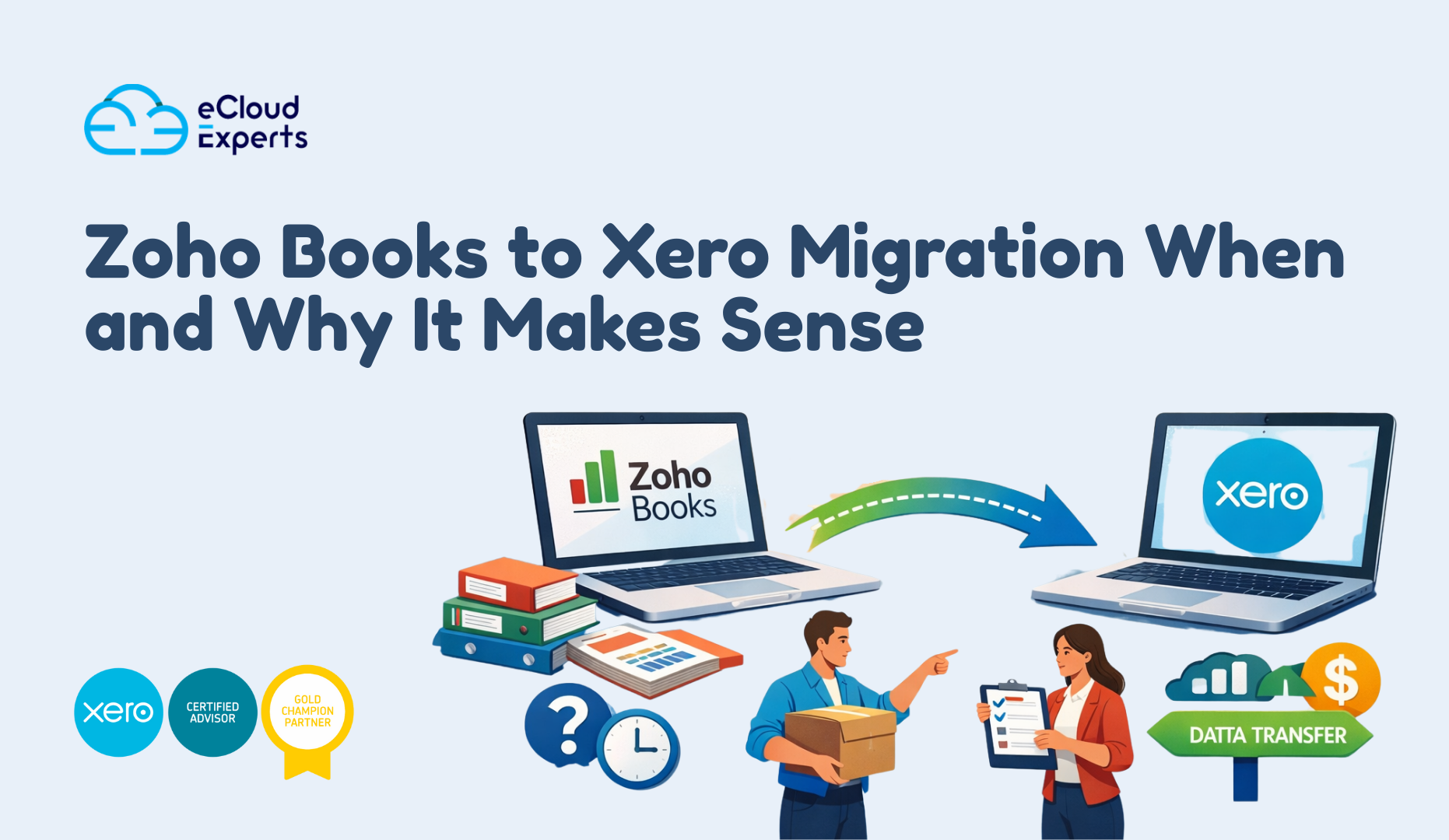
Zoho Books to Xero migration often begins as a slow realisation rather than a sudden decision. Zoho Books is a solid starting point for many small businesses because it is affordable, quick to set up, and easy to learn. In the early days, it usually does the job well by handling basic invoicing, expenses, and bank transactions without much effort. For startups and very small teams, this simplicity can feel like a perfect fit.
Over time, however, business activity increases and financial needs become more demanding. Transaction volumes grow, multiple payment methods are introduced, and reporting requirements become more detailed. At this stage, Zoho Books can start to feel restrictive. Reports may require manual adjustments to answer simple questions, and accountants often need data exported into spreadsheets to get a clear picture. What once felt simple begins to feel limiting.
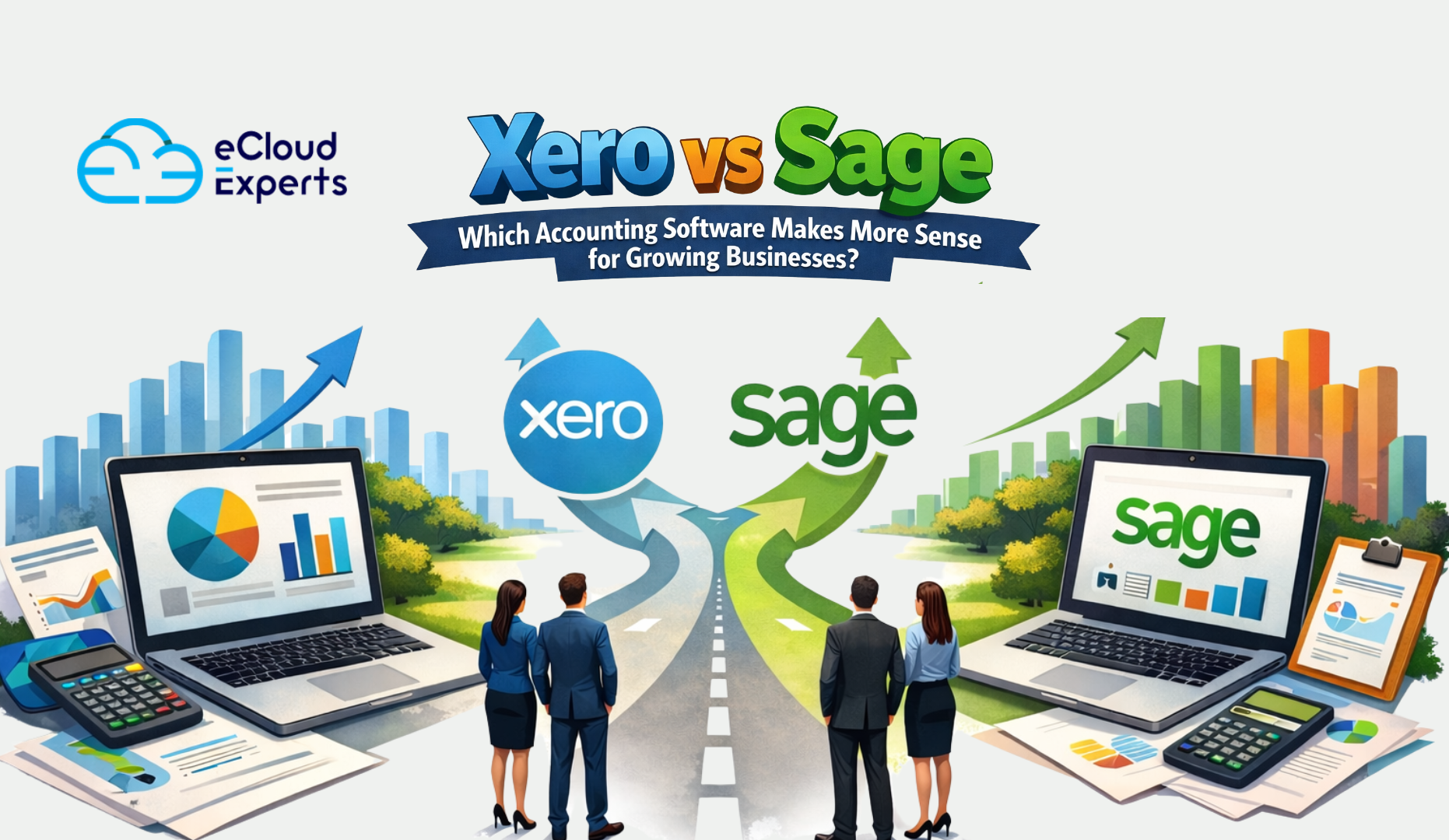
As advisors and internal teams spend more time working around the system rather than within it, frustration builds. Business owners start to question whether Zoho Books still reflects how the business actually operates day to day. A Zoho Books to Xero migration is rarely about dissatisfaction alone. It is a practical response to growth. The goal is not to change software for novelty but to move to a platform that delivers clearer reporting, stronger controls, better collaboration with accountants, and a foundation that supports long term growth with confidence.
If this situation feels familiar, a quick review of your current setup can help you decide whether a Zoho Books to Xero migration is the right next step before limitations start affecting decisions.
When Zoho Books Works Well
Here is an expanded and enriched version of that section, keeping it fully in paragraph format and aligned with the rest of the blog.
Zoho Books works best for small businesses with simple requirements and predictable financial activity. It is well suited to companies with low transaction volumes, one or two bank accounts, and basic reporting needs. For businesses issuing a limited number of invoices each month and tracking straightforward expenses, Zoho Books can feel efficient and easy to manage without specialist accounting knowledge.
Businesses operating in a single country with clear and stable tax rules often find Zoho Books sufficient during the early stages. The system handles core accounting tasks reliably when there are no complex tax scenarios, multi currency transactions, or advanced reporting requirements. In this phase, a Zoho Books to Xero migration is usually not urgent because the software still supports daily operations without friction or heavy manual work.
Most limitations do not appear immediately. They surface gradually as the business grows, transaction volumes increase, and decision making becomes more data driven. What works well at the beginning may start to feel restrictive later. This is why many businesses remain comfortable with Zoho Books for years before reaching a point where a Zoho Books to Xero migration becomes a practical next step rather than an immediate necessity.
Signs You Have Outgrown Zoho Books
Here is an expanded version of that section, keeping the same paragraph structure and tone while adding more practical detail.
Growth has a way of exposing limitations that were easy to ignore earlier. Many businesses begin considering a Zoho Books to Xero migration after facing the same frustrations repeatedly. Reports that once seemed acceptable now require manual adjustments to answer basic questions. Profit figures need explaining, cash flow reports feel unclear, and management decisions start relying on spreadsheets rather than the accounting system itself.
As transaction volumes increase, everyday tasks take longer. Bank reconciliations become more time consuming, especially when multiple payment methods or platforms are involved. Advisors and accountants often struggle to get a clear, complete picture without exporting data for further analysis. This creates delays and increases the risk of error. When workarounds become part of normal operations, it is usually a clear sign that Zoho Books is no longer supporting the business effectively and is beginning to hold growth back rather than enable it.
Why Xero Becomes the Better Choice
Here is an expanded and refined version of that section, keeping everything in paragraph format and consistent with the rest of the blog.
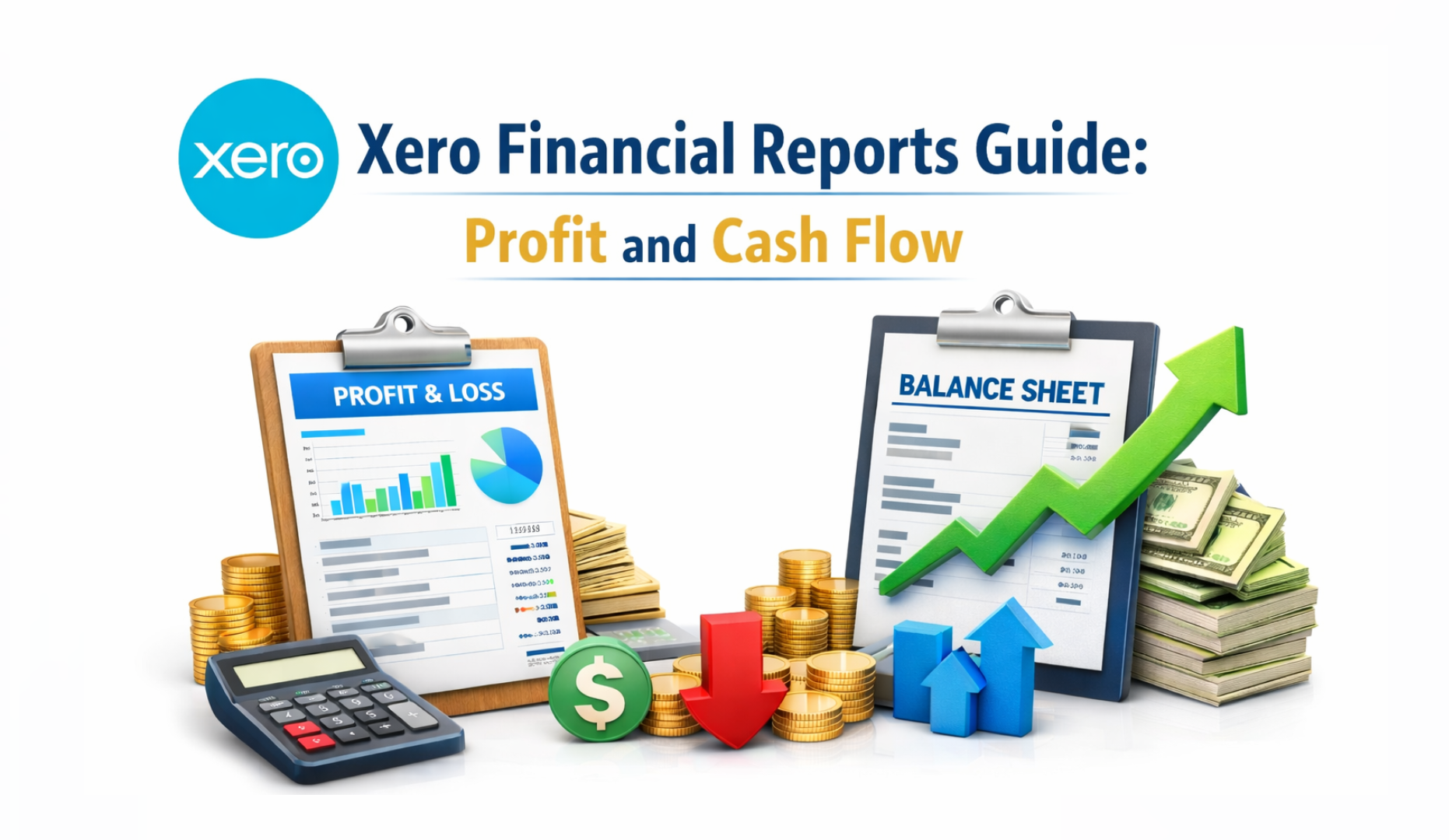
Xero supports growing businesses that need clearer insight and stronger control as operations become more complex. One of the main reasons companies choose a Zoho Books to Xero migration is the improved visibility it provides across financial data. Xero reports are easier to read, more flexible, and better suited for regular review. Business owners can understand performance without relying on manual calculations or external spreadsheets.
Xero also stands out for its wider ecosystem of integrations. As businesses expand into ecommerce, subscription billing, inventory management, or advanced reporting, Xero connects smoothly with a broad range of specialist tools. This reduces manual work and keeps data flowing consistently across systems. Accountants often prefer Xero because collaboration is more efficient, access controls are clearer, and audit trails are easy to follow. Rather than simply recording transactions, Xero helps businesses interpret their numbers, spot trends early, and make decisions with confidence backed by reliable data.
When a Zoho Books to Xero Migration Makes Sense
Timing plays an important role in a successful Zoho Books to Xero migration. The ideal moment to switch is usually at a clean break, such as the start of a new financial year or immediately after a busy trading period has been closed and reconciled. Moving at these points reduces complexity, limits historical corrections, and makes opening balances easier to validate in the new system.
A Zoho Books to Xero migration also makes sense before introducing additional complexity into the business. This includes adding new sales channels, expanding into multiple currencies, launching new entities, or increasing transaction volume significantly. As a business grows, the need for accurate and timely reporting becomes critical for cash flow planning, pricing decisions, and strategic direction. Waiting too long often increases both cost and risk, as reporting issues and manual workarounds build on top of each other. Migrating earlier allows the business to grow on a stable accounting foundation rather than trying to fix problems after they have multiplied.
Common Concerns Before Migrating
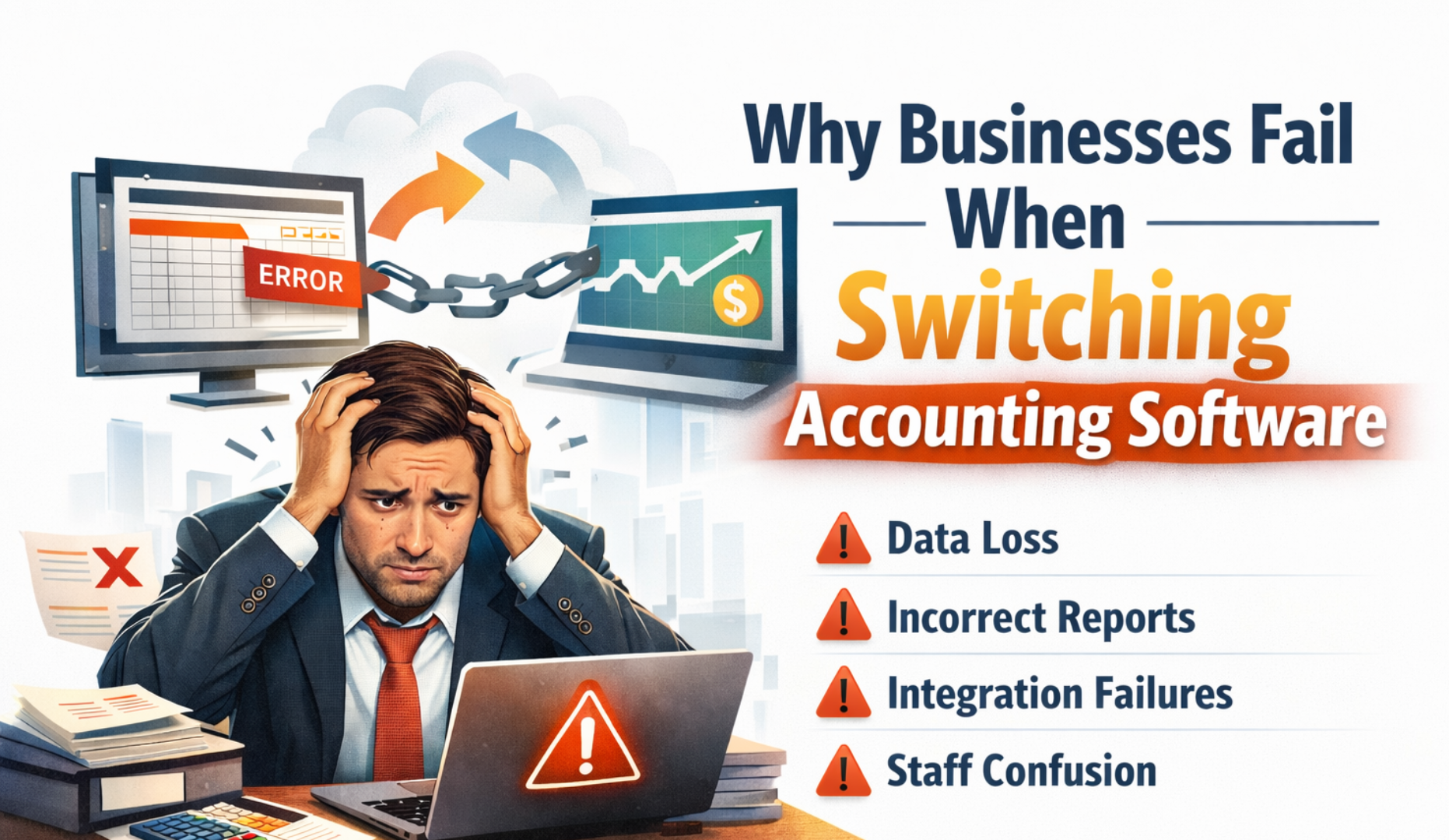
Concerns around Zoho Books to Xero migration are common and completely understandable, especially for business owners who rely on accurate financial data to make day to day and strategic decisions. Many worry about losing historical information, experiencing downtime during the switch, or discovering that reports no longer match once the migration is complete. Others fear disruption to invoicing, bank feeds, or access for their accountant during the transition. These concerns often stem from hearing about rushed migrations or poorly handled data transfers where issues were only discovered long after the move.
In reality, most risks do not come from the Zoho Books to Xero migration itself. They come from teams skipping essential review and validation steps before and after the move. When businesses fail to check opening balances, assume tax settings are correct, or leave bank reconciliations unresolved, problems surface later. These issues rarely appear right away. They show up when teams review financial reports, prepare tax filings, or advisors begin relying on the data to make decisions.
With proper planning, careful testing, and thorough verification, these risks are manageable and predictable. A structured approach ensures historical data is preserved, reporting remains accurate, and day to day operations continue without interruption. Taking the time to validate the numbers reduces uncertainty, protects business continuity, and allows the transition to Xero to feel controlled rather than disruptive.
How eCloud Experts Handles Zoho Books to Xero Migration
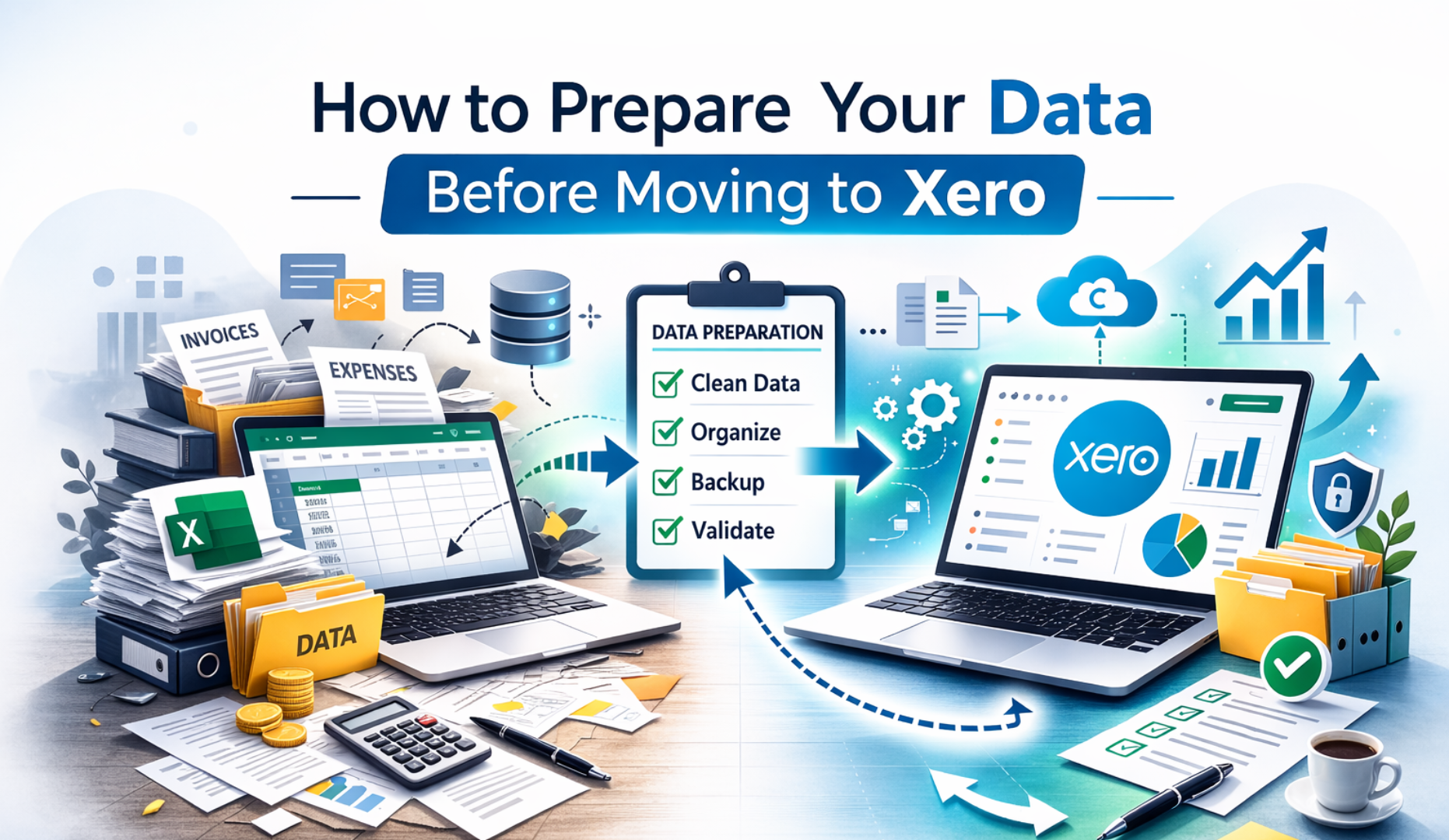
At eCloud Experts, we treat Zoho Books to Xero migration as a controlled and structured process rather than a simple data transfer. We begin by learning how your business runs in practice, not just how the software is set up. Our team examines your Zoho Books data closely, checking opening balances, tax handling, bank reconciliations, and the reliability of key reports. We fix any issues we find before proceeding. Data only moves once the figures are accurate, consistent, and ready to be trusted.
Once we prepare the data, we migrate it into Xero with care and precision. We focus on accuracy rather than speed to ensure historical data, balances, and settings map correctly. After the migration, we carry out detailed testing of reports, bank reconciliations, and everyday workflows such as invoicing and payments. The objective is straightforward. When you begin using Xero, you should have full confidence in your numbers and a system that supports your business without hesitation, confusion, or second guessing.
Risks of DIY Migration
Some businesses attempt a Zoho Books to Xero migration on their own in an effort to reduce upfront costs. At first, everything may appear fine. Data imports without obvious errors and day to day transactions continue as normal. However, problems from DIY migrations often surface weeks or even months later, once reports are reviewed more closely or advisors begin relying on the numbers.
Incorrect opening balances, broken tax reports, and unreconciled bank accounts are common outcomes of a rushed or inexperienced approach. These issues quietly undermine confidence in the system and make financial reporting unreliable. Business owners may stop trusting profit figures or delay decisions because the numbers do not feel right. Fixing these problems later usually costs more than doing the migration properly from the start. DIY migrations rarely fail immediately. They fail slowly, and that slow failure is far more damaging to a growing business.
Conclusion
A Zoho Books to Xero migration is a strategic decision rather than a purely technical change. When Zoho Books starts to feel restrictive, reporting no longer provides clear answers, or growth plans require stronger controls and better visibility, Xero often becomes the more suitable long term platform. The decision is usually driven by the need for confidence in financial data rather than dissatisfaction alone.
When handled properly, a Zoho Books to Xero migration delivers cleaner data, clearer insight, and a system that supports the business as it grows in size and complexity. It creates a stronger foundation for decision making, planning, and collaboration with advisors. The key is not rushing the move but approaching it with care, structure, and expertise so the new system delivers lasting value rather than new problems.
Call to Action
If you are considering a Zoho Books to Xero migration, it is worth getting expert guidance before making the switch. eCloud Experts helps businesses move with confidence by ensuring data accuracy, clear reporting, and a smooth transition into Xero. Speak to our team today to assess whether Xero is the right next step for your business and to avoid costly mistakes during the migration process.