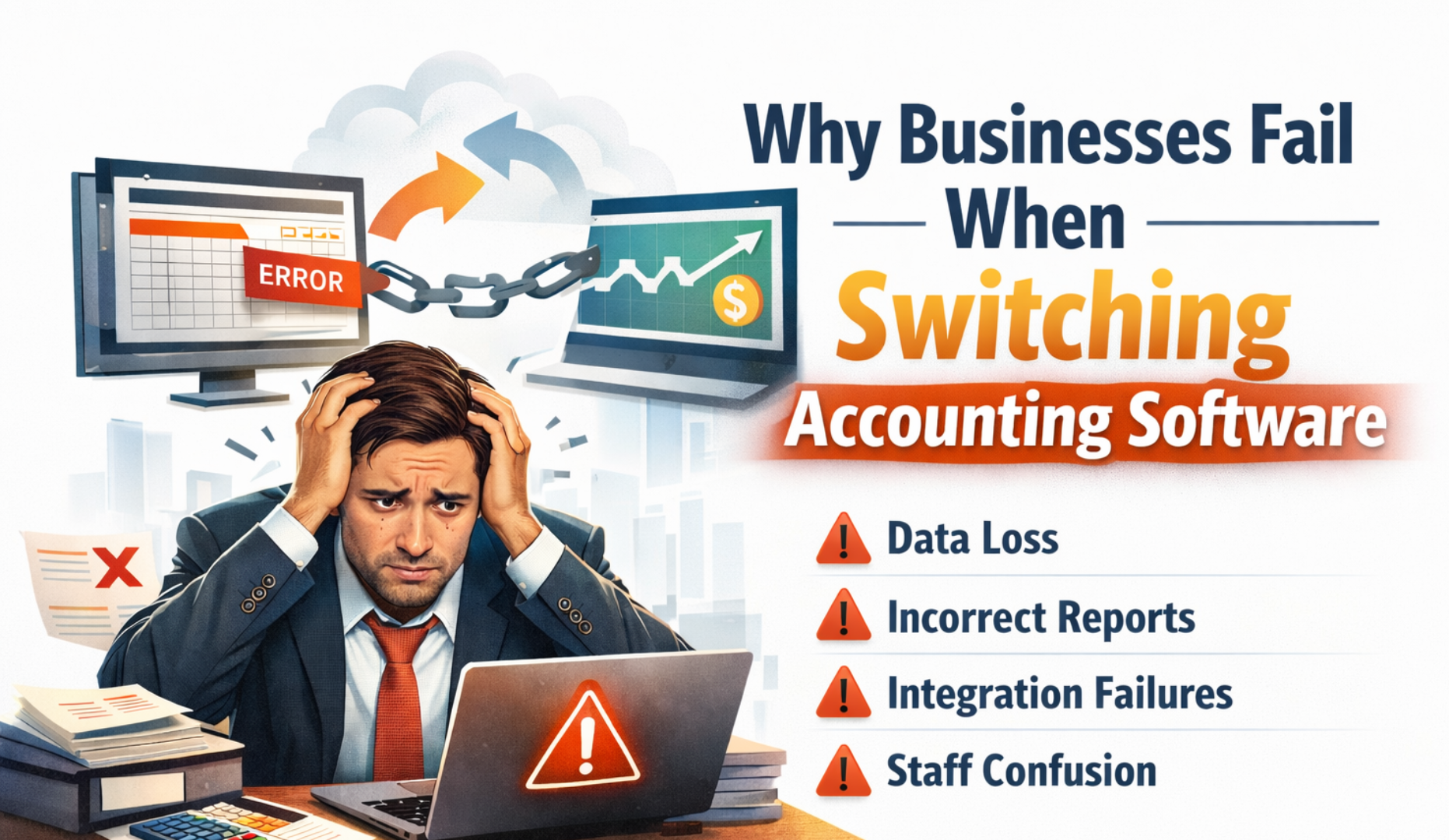
A Sage to Xero migration often looks fine at first glance. Balances appear close. Reports load. Banks connect.
Then weeks later the problems begin.
VAT totals do not match. Old invoices reopen. Bank reconciliations refuse to balance. Your accountant starts asking uncomfortable questions.
This is the reality many businesses face after a Sage to Xero migration that was rushed or poorly planned.
The dangerous part is this.
Most migration mistakes are silent at the start. They only show up when you rely on the numbers.
This guide explains exactly what breaks when a Sage to Xero migration is done wrong. More importantly it explains how to avoid these problems before they cost time money and trust in your accounts.
Why Sage to Xero Migration Goes Wrong More Often Than People Expect
On the surface Sage and Xero look similar.
Both track sales purchases VAT and bank activity.
Under the hood they work very differently.
Sage allows more manual control in certain areas. Xero relies heavily on rules structure and automation. When data moves between them those differences matter.
Here is why problems happen.
First the chart of accounts rarely matches.
Sage setups are often older and heavily customised. Xero expects a cleaner structure. If this is not redesigned properly reports become unreliable.
Second VAT logic is not the same.
Tax codes that look identical behave differently in reports. A wrong mapping can quietly damage VAT returns.
Third, historical transactions behave differently.
Sage tolerates certain legacy entries that Xero does not like. When these are imported without cleanup errors follow.
Finally many migrations focus only on moving data not validating it.
Data moves but no one checks whether it still makes sense.
This is why Sage to Xero migration is not a simple export and import job. It is a conversion project that needs decisions not just tools.
What Breaks First When Sage to Xero Migration Is Done Wrong
When something goes wrong it usually shows up in predictable places. These are the first warning signs.
Opening Balances Stop Matching
This is the most common issue.
After migration the trial balance in Xero does not match Sage.
A suspense account appears with no explanation.
Retained earnings looks too high or too low.
This usually happens because
Incorrect cutoff dates were used
Historical journals were imported twice
Control accounts were handled incorrectly
If opening balances are wrong everything built on top of them is wrong too.
VAT Reports Stop Making Sense
VAT problems are subtle but serious.
Common symptoms include
VAT payable does not match Sage
Old VAT periods look different
Flat rate figures are incorrect
This happens when
Tax codes were mapped incorrectly
Partial VAT periods were migrated
Manual VAT adjustments were missed
The risk here is compliance, not just reporting. Fixing VAT after migration often means manual corrections and explanations to HMRC.
Customer and Supplier History Becomes Unreliable
After a bad Sage to Xero migration businesses often see
Paid invoices showing as unpaid
Duplicate customers or suppliers
Incorrect aged debt reports
This creates confusion fast.
Chasing customers who already paid damages trust.
Paying suppliers twice damages cash flow.
This usually traces back to poor handling of historical invoices and payments during migration.
Bank Reconciliation Turns Into a Daily Fight
Banks are where problems become impossible to ignore.
Common issues include
Duplicate bank transactions
Missing opening balances
Reconciliations that never reach zero
Once bank reconciliation breaks, daily bookkeeping becomes stressful. Every new transaction adds uncertainty instead of clarity.
Management Reports Lose Credibility
This is the quiet killer.
Profit looks higher than expected.
Costs sit in strange categories.
Comparisons with last year make no sense.
At this point decision makers stop trusting reports.
And when reports cannot be trusted the system stops being useful.
The Hidden Damage That Appears Months After a Bad Sage to Xero Migration
Some Sage to Xero migration problems are loud.
Others wait patiently.
These are the issues that surface later and cost the most.
Year End Becomes Expensive and Stressful
At year end your accountant expects clean numbers.
Instead they find differences that cannot be explained quickly.
Opening balances do not tie back.
VAT control accounts look off.
Old journals have no audit trail.
What should be a routine process turns into detective work.
Extra hours are billed. Deadlines get tight.
All because the migration was never fully verified.
Fixing Data After Migration Always Costs More
Many businesses assume problems can be fixed later.
That is technically true.
It is also far more expensive.
By the time issues are discovered
More transactions have been added
Reports have already been used
VAT may already be filed
Correcting data now means rolling changes forward, not simply fixing the past.
Decision Making Is Based on the Wrong Numbers
This is the most dangerous outcome.
If profit is overstated you may overspend.
and costs are understated you may underprice, cash flow is wrong you may delay action too long.
A Sage to Xero migration that damages reporting does not just affect accounts. It affects business decisions.
The Most Common Sage to Xero Migration Mistakes
These mistakes appear again and again. Avoiding them avoids most problems.
Migrating Everything Without a Plan
More data does not mean better data.
Blindly importing years of history brings
Old errors
Legacy entries
Broken audit trails
In many cases opening balances plus current year detail is the smarter option.
Not Locking Sage Before Migration
If Sage remains active during migration numbers will never match.
Invoices get raised. Payments get applied.
Now two systems disagree and no one knows why.
Migration must happen from a locked and finalised dataset.
Using the Default Xero Chart of Accounts
Default charts are generic.
Your business is not.
Using them without review leads to
Poor reporting
Misclassified costs
Confusing profit figures
The chart of accounts should be designed not accepted.
Incorrect VAT Code Mapping
This single mistake causes most compliance issues.
Similar looking VAT codes behave differently in Xero.
One wrong mapping can distort multiple reports.
VAT must be tested not assumed.
Skipping Reconciliation Checks
If you do not reconcile after migration you are guessing.
Every migration should confirm
Trial balance matches Sage
Bank balances reconcile
VAT totals align
No checks means no confidence.
No Formal Sign Off Process
Without sign off everyone assumes someone else checked.
Then problems appear later and responsibility is unclear.
A proper Sage to Xero migration ends with clear confirmation that numbers are correct.
How a Proper Sage to Xero Migration Should Actually Work
A successful Sage to Xero migration follows a clear sequence.
Not shortcuts. Not guesswork.
Here is what a proper process looks like in simple terms.
Step One Assess
Before any data moves the scope must be clear.
This step confirms
Which Sage version is being used
The conversion date
What data will move and what will not
VAT schemes and reporting needs
Connected apps and bank feeds
Skipping this step is where most migrations fail before they start.
Step Two Prepare
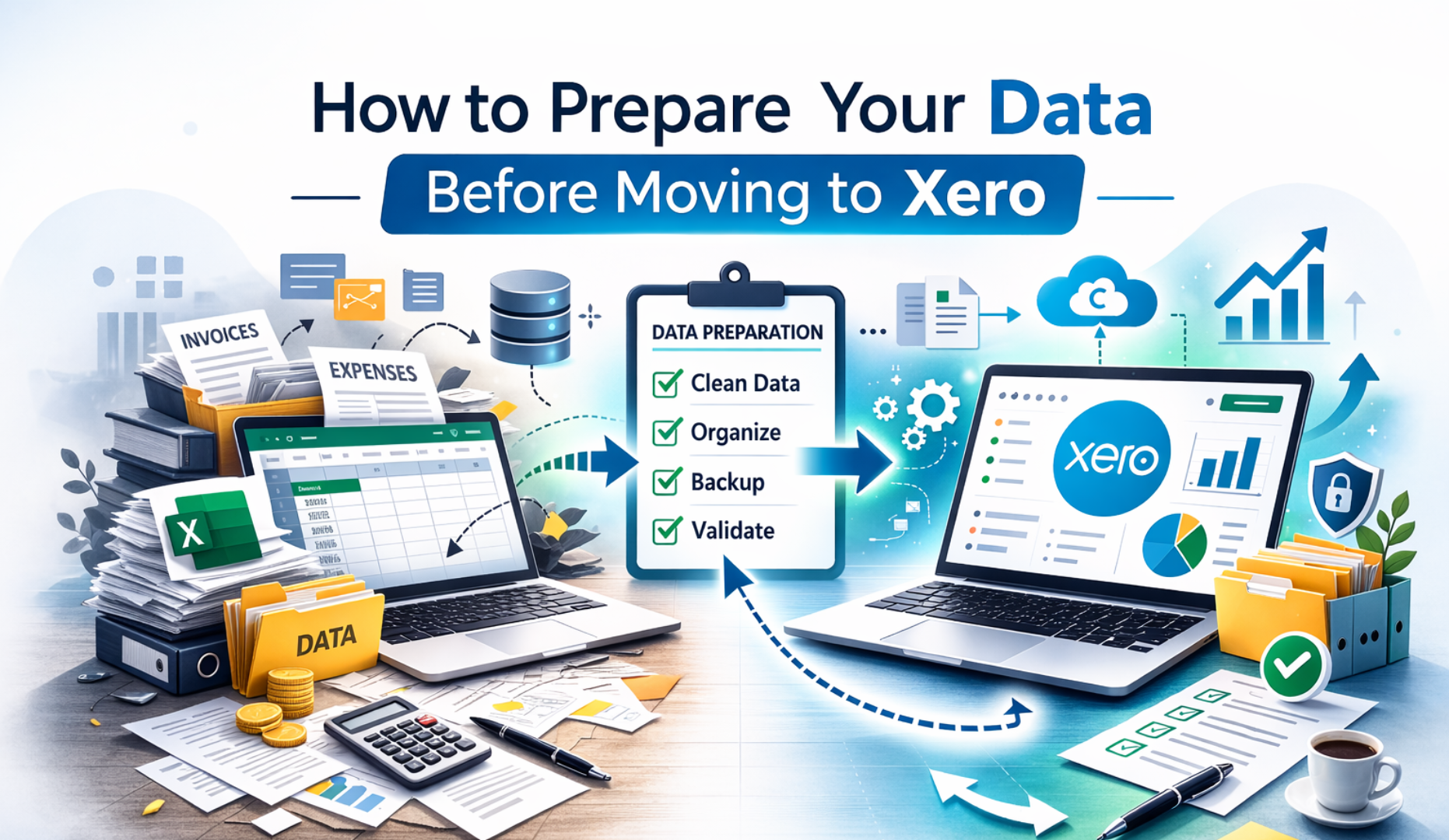
Preparation is where problems are prevented.
This includes
Cleaning up Sage data
Removing old or duplicate accounts
Finalising balances
Designing a clean Xero chart of accounts
Confirming VAT setup
Good preparation reduces errors later. Poor preparation multiplies them.
Step Three Migrate
Only now does data move.
A controlled Sage to Xero migration includes
Contacts
Opening balances
Outstanding invoices and bills
Bank balances
Carefully selected historical data
Each import is done using the right tools and templates not guesswork.
Step Four Verify and Support
This is the most important step and the most skipped.
Verification includes
Trial balance comparison
Bank reconciliation checks
VAT report checks
Aged debtor and creditor review
Only after this should Sage be closed.
Support follows with
User guidance
App connections
Post migration fixes if needed
If your provider cannot explain this process clearly the project is at risk.
When a Partial Sage to Xero Migration Is Smarter Than a Full One
More history is not always better.
In many cases a partial Sage to Xero migration delivers cleaner results.
When Opening Balances Only Make Sense
This approach works well when
Sage data is old or messy
Historical errors exist
Reports matter more than old detail
You keep Sage for reference and start fresh in Xero.
When Full History Is Justified
Full history migration makes sense when
Records are clean and consistent
Audit access is essential
Detailed comparison is required
The key is choice. Not default behaviour.
Experienced migration specialists advise. They do not automatically import everything.
Signs Your Sage to Xero Migration Is Already Broken
If you have already migrated, check these signs.
Your trial balance does not match Sage
VAT reports differ from previous submissions
Old invoices show as unpaid
Bank reconciliation will not balance
Suspense accounts appeared without explanation
If one or more of these exist your Sage to Xero migration needs review.
Ignoring them only makes correction harder.
How eCloud Experts Prevent These Problems
At eCloud Experts Sage to Xero migration is treated as a conversion project not a data dump.
We focus on
Clear scope and planning
Clean data preparation
Correct VAT handling
Full reconciliation checks
Post migration support
Every migration ends with verified numbers and client sign off. No guessing. No surprises.
Final Advice Before You Switch From Sage to Xero
Sage to Xero migration is not risky by nature.
Doing it casually is.
Most problems come from rushing or underestimating the differences between systems. The cost of doing it right is always lower than the cost of fixing it later.
If you are planning a Sage to Xero migration or suspect yours is already wrong the safest step is a proper review.
Call to Action
Book a Sage to Xero migration review
Get your data checked before you switch
Fix a broken Sage to Xero migration with confidence