Xero reports are one of the most powerful tools inside your accounting system. Yet most business owners barely use them properly. They glance at revenue, check the bank balance, and assume everything is fine. That is risky.
If you do not understand your numbers, you are making decisions in the dark. Sales alone do not mean success. Profit does not always mean cash. Growth can even create pressure if it is not controlled.
This is where Xero reports become critical.
They turn daily transactions into clear financial insight. They show what is working, what is draining money, and where problems are building. When used properly, Xero reports help you lead with confidence instead of guesswork.
The real danger is not a lack of effort. It is a lack of visibility. Many businesses grow quickly but fail to monitor margins, expenses, and cash movement closely. They assume strong sales mean strong performance. In reality, rising costs, unpaid invoices, or increasing debt can quietly weaken the business. Xero reports help uncover these issues before they become serious.
When you review Xero reports consistently, you begin to see patterns. You notice whether expenses are increasing month after month. and see if customers are taking longer to pay. You understand whether profits are stable or shrinking. These insights allow you to make informed decisions about hiring, pricing, investment, and expansion.
Another key point is timing. Financial data only helps if you review it regularly. Waiting until the end of the year is too late. Monthly review of Xero reports gives you control. It allows you to correct small problems early instead of facing large financial surprises later.
In this guide, you will learn how to read profit, cash flow, and performance reports in simple language. You will understand what each report shows, what numbers matter most, and how to use Xero reports to run your business with clarity and confidence. No confusion. No technical language. Just practical insight you can apply immediately.
What Are Xero Reports and Why They Matter
Xero reports are structured summaries created from your financial data. Every invoice, bill, payment, expense, and bank transaction feeds into them automatically. Instead of scrolling through hundreds of entries, Xero reports organize everything into clear, readable insights.
Think of them as your business health check. Just like a medical report shows blood pressure and heart rate, Xero reports show profit, cash position, and financial strength. They help you understand not just where your business stands today, but where it is heading.
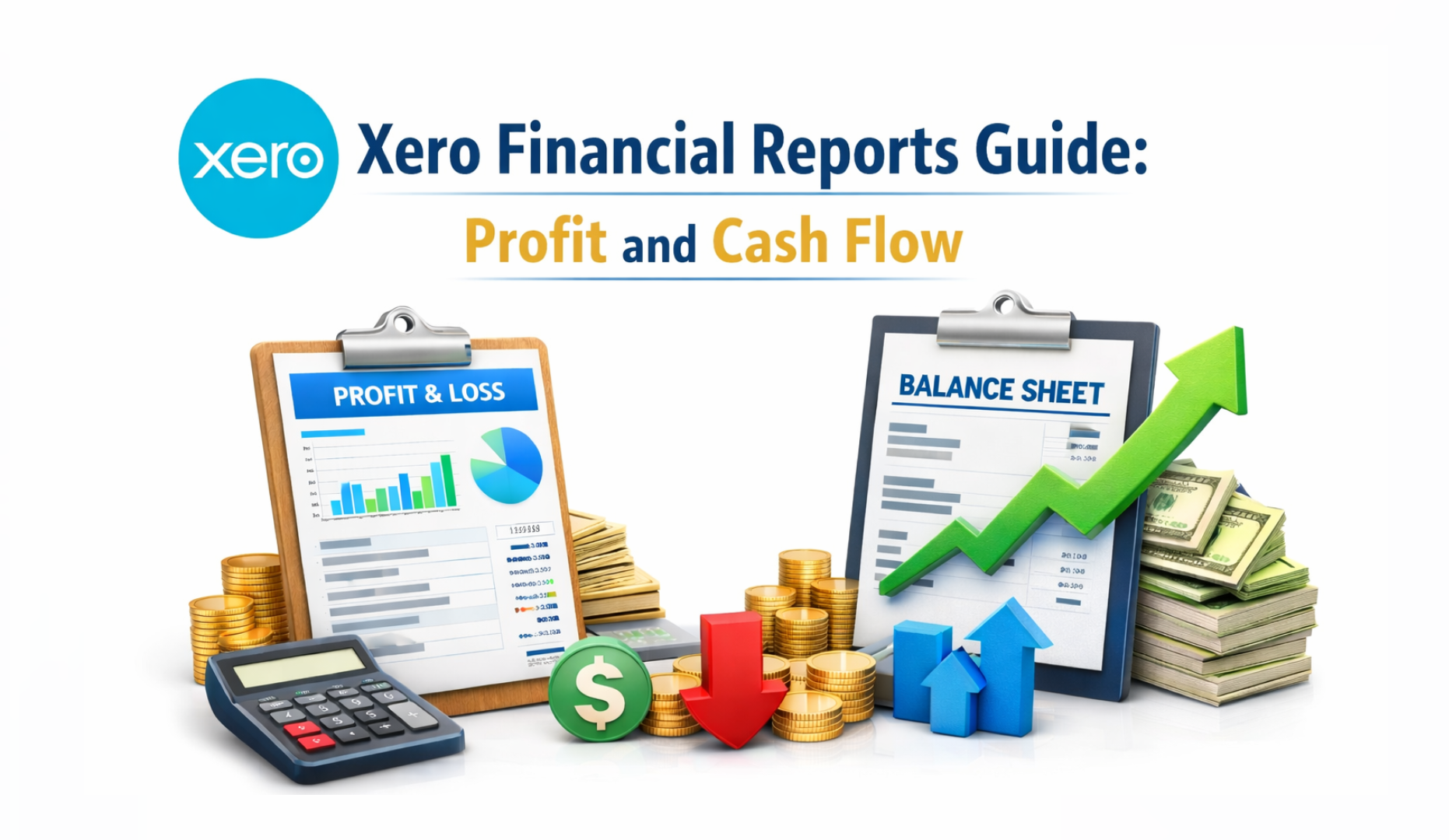
The core Xero financial reports include the profit and loss report, the cash flow report, the balance sheet report, aged receivables and payables, and management summary reports. Each of these Xero reports serves a different purpose, and together they provide a complete financial picture.
The profit and loss report answers a simple but critical question: Are you making money? It shows your revenue, costs, and final profit over a specific period.
The cash flow report answers a more urgent question: Do you actually have money available? It tracks real cash moving in and out of your business. This matters because profit on paper does not always mean cash in the bank.
The balance sheet report answers another key question: How strong is your financial position today? It shows what your business owns, what it owes, and what is left for the owner.
Many business owners focus only on revenue. That is a mistake. Revenue can grow while profit shrinks. Profit can look healthy while cash becomes tight. Strong businesses monitor all three areas through Xero reports, not just sales figures.
When you review Xero reports regularly, you start spotting trends early. You notice rising costs before they damage margins. and identify slow paying customers before cash flow becomes a problem. You see debt levels increasing before they create pressure.
In short, Xero reports give you visibility. And visibility gives you control.
Numbers always tell a story. But they only help if you take the time to read and understand them.
Understanding the Xero Profit and Loss Report
The Xero profit and loss report shows income, expenses, and net profit over a selected period. It is often the first of the Xero reports that business owners review because it quickly answers the big question: Are we making money?
At first glance, it looks simple. Revenue at the top, expenses underneath, profit at the bottom. But this report deserves careful attention. Small changes inside it can signal big shifts in performance.
The report includes revenue, which is the money earned from sales. This shows how much you billed or invoiced during the period. Strong revenue growth can look impressive, but it only tells part of the story.
Next is cost of goods sold. These are the direct costs tied to delivering your product or service. For example, materials, subcontractor costs, or direct labor. Subtracting these from revenue gives you gross profit. Gross profit shows how efficient your core operations are. If gross profit margins shrink, it may mean rising supplier costs or pricing issues.
Below that are operating expenses. These include rent, salaries, software subscriptions, marketing costs, utilities, insurance, and other overhead expenses. These costs keep the business running, but if they grow too fast, they can quietly eat into profits.
Finally, you see net profit. This is the amount left after all expenses are deducted. It represents the true earnings of the business during that period.
Now here is the key insight. High revenue does not guarantee strong profit. A business can increase sales but lose efficiency. If costs rise faster than income, margins shrink quietly. Many growing businesses fall into this trap. They celebrate higher sales while profitability weakens in the background.
When reviewing Xero reports like the profit and loss report, focus on gross profit margin percentage and net profit margin percentage. These ratios reveal whether you are becoming more or less efficient over time. Also review which expense categories are increasing and compare month to month performance. A single month rarely tells the full story. Trends over three to six months give better clarity.
A healthy profit and loss report shows stable or improving margins, controlled expenses, and consistent profitability. If margins fluctuate heavily or expenses rise without clear reason, deeper investigation is needed.
But remember, profit on paper does not always mean cash in the bank. The profit and loss report records sales when invoices are issued, not when money is received. That difference is critical. This is why the next report, cash flow, becomes essential for a complete understanding of your financial position.
Understanding the Xero Cash Flow Report
Here is a truth many business owners learn the hard way. A company can show healthy profit and still run out of cash. When that happens, bills cannot be paid, salaries get delayed, and growth plans stop suddenly. Profit looks good on paper, but the bank balance tells a different story.
This is why the Xero cash flow report is one of the most important Xero reports you can review. It focuses on real money moving in and out of your business. Unlike other Xero reports that may include accounting entries such as accruals or unpaid invoices, this report looks purely at actual cash activity. It shows what has physically entered or left your bank accounts.
The report is divided into three main areas.
Operating activities show cash generated from daily business operations. This includes customer payments received and supplier or expense payments made. This section reveals whether your core business is generating positive cash.
Investing activities cover money spent on long term assets such as equipment, vehicles, or technology. It also includes cash received from selling assets. These transactions may not happen every month, but they can significantly impact your bank balance.
Financing activities include loans taken, loan repayments, and owner investments or withdrawals. This section shows how the business is funded and whether it relies heavily on borrowed money.
You may see strong profit inside other Xero reports, but if customers delay payments or expenses are paid quickly, cash flow can become negative. This gap between profit and cash is where many businesses struggle.
When reviewing the cash flow report, pay close attention to cash from operating activities. This is the most important section. A healthy business should generate positive cash from its normal operations. Also check for large one off expenses that may reduce cash temporarily. Review timing gaps between income and payments, and look at cash trends across several months rather than one period.
If operating cash flow remains negative over time, action is required. That may mean improving collections, adjusting payment terms, reducing costs, or reviewing pricing. Ignoring it only increases risk.
Revenue supports growth. Cash keeps the doors open.
That is why disciplined business owners review Xero reports for cash flow every month without exception.
Understanding the Xero Balance Sheet Report
The balance sheet report is often overlooked. That is a mistake. Many business owners focus only on profit and cash flow, but the Xero balance sheet report reveals the deeper financial structure of your business. It shows stability, risk, and long term strength in one clear snapshot.
The Xero balance sheet report shows what your business owns and what it owes at a specific date. Unlike profit and loss, which covers a period of time, the balance sheet captures a single moment. Think of it as a financial photograph. It tells you where the business stands right now.
It includes three main sections.
Assets represent everything the business owns. This includes cash in the bank, accounts receivable from customers, inventory, equipment, and other resources that have value. Strong assets usually signal operational strength, especially when cash and receivables are healthy.
Liabilities represent what the business owes. This includes loans, credit card balances, unpaid supplier bills, and taxes owed. Liabilities are normal in most businesses, but they must be controlled. When they grow too quickly, financial pressure increases.
Equity represents the owner’s share of the business after liabilities are deducted from assets. It reflects retained profits and overall accumulated value.
The formula is simple. Assets minus liabilities equals equity.
But the insight behind that formula is powerful.
When reviewing Xero reports like the balance sheet, look closely at cash reserves. Healthy cash gives flexibility. Review customer debt levels to see whether receivables are rising too fast. Check supplier debt levels and loan balances to understand repayment obligations. Also monitor changes in retained earnings, which show whether profits are building over time.
The balance sheet does not just show numbers. It reveals financial resilience. Combined with other Xero reports, it completes the full picture of profitability, liquidity, and stability.
How to Use Xero Reports to Measure Business Performance
Looking at numbers is not enough. You must analyze them.
Xero reports allow you to measure performance clearly.
Here is how to use them effectively:
Track Margins
Compare gross and net profit margins over time. Improving margins show better efficiency.
Control Expenses
Monitor expense ratios. Are certain costs rising faster than revenue?
Review Monthly Trends
Use comparison columns inside Xero reports. Trends highlight strengths and weaknesses.
Monitor Cash Stability
Check whether operating cash flow remains positive.
Build Management Reports
Combine key Xero reports into one monthly performance pack.
When you review Xero reports consistently, decision making improves. You move from reacting to problems to preventing them.
That shift creates stronger control and better growth planning.
Common Mistakes When Reading Xero Reports
Even with good tools, mistakes happen.
Here are common errors:
• Only checking revenue
• Ignoring cash flow
• Reviewing reports once a year
• Failing to compare periods
• Overlooking small cost increases
• Relying on inaccurate bookkeeping
If your data is messy, your Xero reports will mislead you. Clean records are essential for reliable insight.
Financial clarity starts with disciplined bookkeeping.
How Often Should You Review Xero Reports
At minimum, review Xero reports monthly.
Weekly review is even better for growing businesses.
Monthly checklist:
• Profit and loss comparison
• Cash flow movement
• Balance sheet position
• Aged receivables
• Aged payables
Quarterly review should include deeper analysis of margins, cost control, growth sustainability, and debt levels.
Regular review reduces financial surprises. And in business, surprises are rarely positive.
How eCloud Experts Help You Understand Xero Reports
Numbers can feel overwhelming. That is normal.
At eCloud Experts, we help business owners turn Xero reports into practical decisions. We do not just generate reports. We interpret them clearly.
Our support includes:
• Reviewing Xero financial reports for accuracy
• Customizing management reporting packs
• Explaining profit and cash flow in plain language
• Identifying risks early
• Building structured monthly reporting routines
When your Xero reports are clear, your decisions become sharper.
If you are unsure whether your numbers tell the full story, our team can guide you. Clear reporting leads to confident leadership.
Book a consultation today and take control of your financial performance.
Take Control of Your Numbers with Expert Support
Understanding Xero reports is one thing. Using them to make smarter decisions is another. Many business owners generate reports every month but never fully analyze what the numbers are saying. That gap can cost money, create stress, and slow growth.
At eCloud Experts, we help you turn Xero reports into clear action steps. We review your profit and loss, cash flow, and balance sheet in detail. We identify risks, highlight opportunities, and explain everything in simple language you can actually use.
Whether you need help setting up structured reporting, improving data accuracy, or building a monthly review routine, our team is ready to support you.
Do not wait until cash becomes tight or margins start shrinking.
Book a consultation with eCloud Experts today and gain real clarity from your Xero reports. When you understand your numbers, you lead with confidence.